
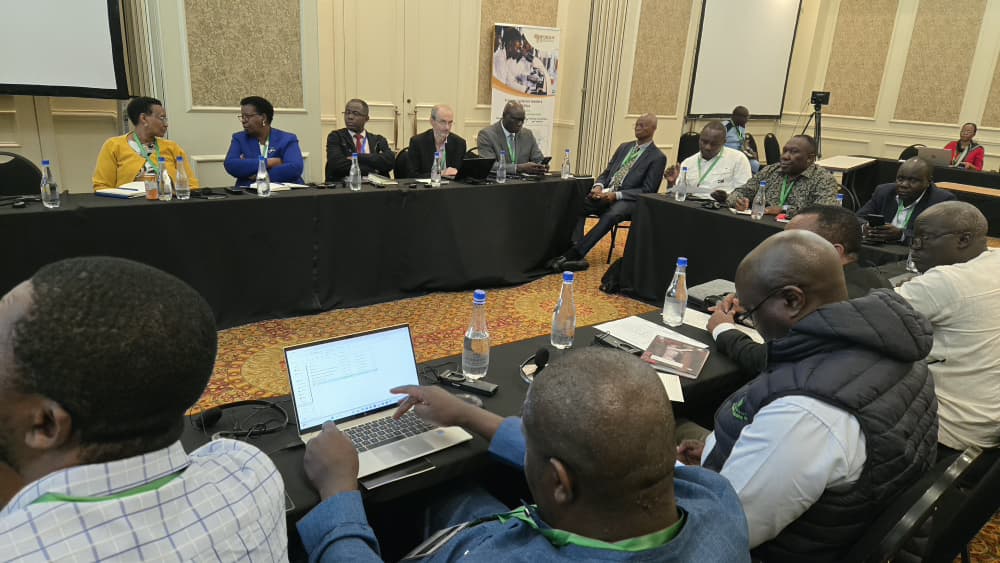
During the 21st RUFORUM Annual General Meeting held at Grand Palm, Gaborone, Botswana, CCARDESA joined a session which opened with a powerful call for unity, knowledge-sharing, and innovation as university leaders, policymakers, and development partners gathered for the High-Level Policy Dialogue on the Role of Africa’s Universities in Transforming Food Systems Towards Resilience and Peace in Fragile and Conflict-Affected Countries.
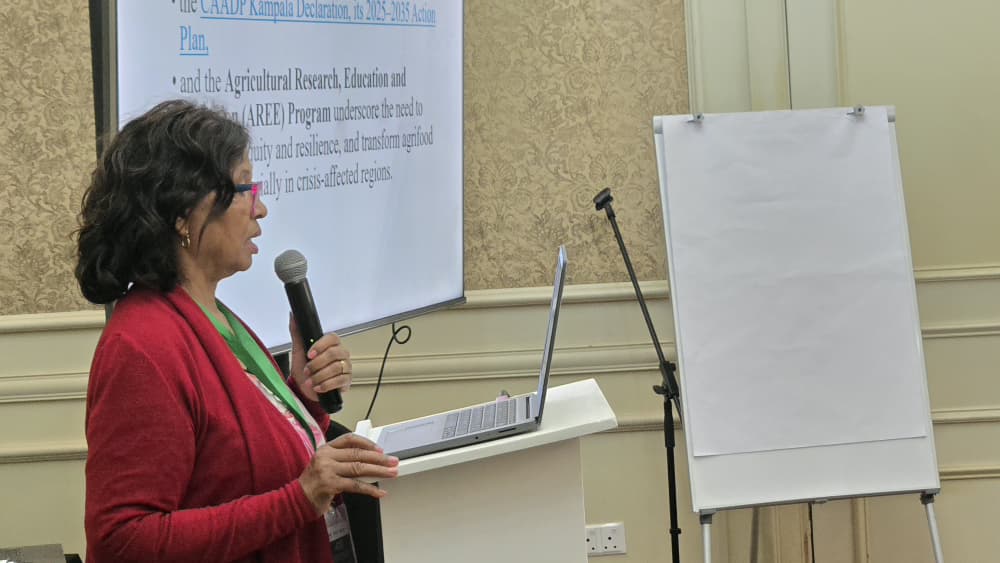
Delivering the opening remarks, Prof. Agness Mwangombe from the University of Nairobi, set the tone by emphasizing the collective responsibility of institutions and partners across the continent. She urged stakeholders to commit to co-developing a shared education, research, and knowledge agenda that strengthens food system equity and resilience. “This is the moment for us to act with unity and purpose,” she said. “We must build a continental framework that supports learning, innovation, and leadership, especially in countries facing fragility and conflict. No single institution can do this alone.”
Prof. Mwangombe further underscored the value of a strong South–South–North partnership, encouraging partners to mobilize political and financial support and to back the establishment of a RUFORUM-led Knowledge and Learning Platform on Equitable and Resilient African Food Systems. This platform, she noted, would serve as an engine for policy engagement, institutional learning, and the empowerment of youth, women, and vulnerable groups across Africa.
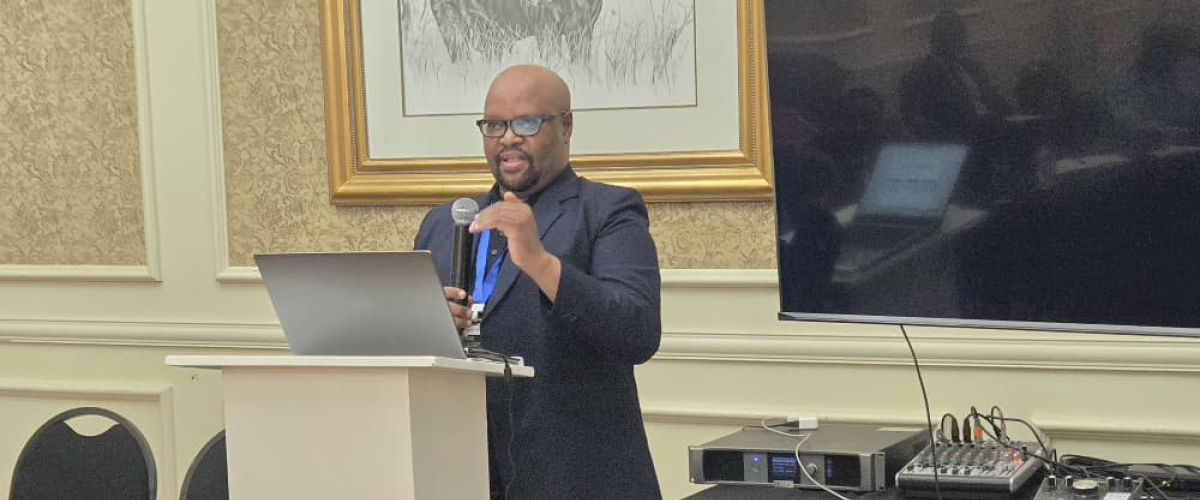
The dialogue advanced into a compelling keynote address by Prof. Cliff Sibusiso Dlamini, Executive Director of CCARDESA, who reinforced the central role of universities in transforming Africa’s agriculture and food systems. He noted that the continent’s fragile and conflict-affected regions urgently require strengthened investments in science, technology, innovation, and human capital to build resilience. Prof. Dlamini outlined three critical contributions universities must make: providing technical leadership through climate-smart agriculture, early-warning systems, modelling, and food safety innovations; advancing human capital development with modern curricula that promote systems thinking, digital competencies, and expanded opportunities for women and youth; and generating rigorous evidence for policy, particularly in land governance, water management, and the prevention of resource-based conflicts.
Drawing on frameworks such as Agenda 2063, CAADP, and STISA-2024, he emphasized that universities are engines of innovation, advancing geospatial tools, digital solutions, and applied research that inform policy and drive long-term transformation. Prof. Dlamini stressed that Africa must lead, not follow, if it is to unlock the full potential of its knowledge systems. “Africa’s future depends on unlocking knowledge and collaboration,” he noted. “Let us act with purpose to build sustainable, resilient food systems that support stability and long-term development.”
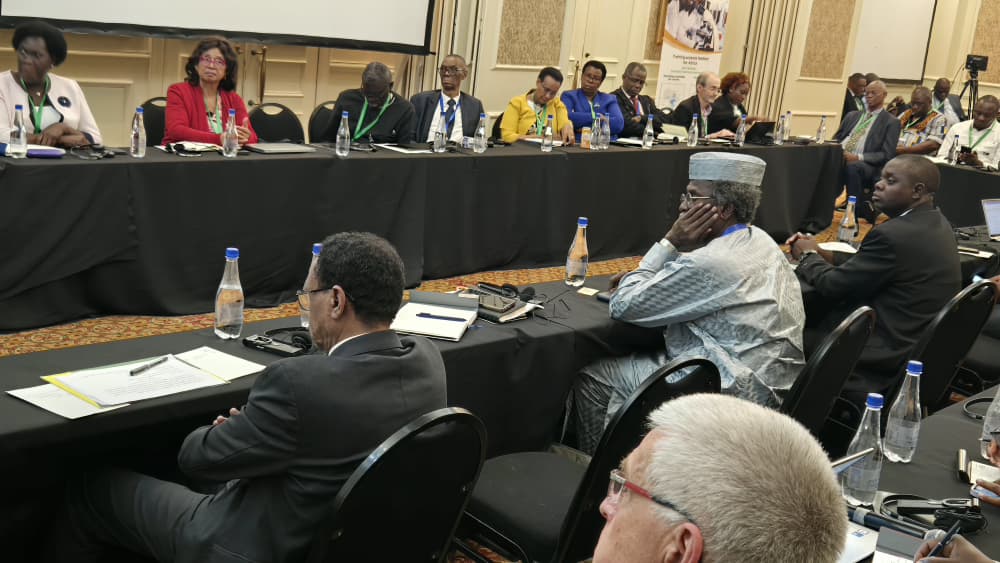
Adding a perspective from a country still emerging from conflict, Honourable Madut Biar Yel, Minister of Higher Education, Science and Technology of South Sudan, spoke candidly about the challenges and progress in rebuilding the nation’s food and education systems. He explained that the war severely disrupted food production, yet the government has remained committed to strengthening higher education as a foundation for resilience. “We have prioritized training farmers, pupils, and young people in modern agriculture, while exploring new technologies, including water innovations and solar energy,” he said. He highlighted efforts to align university curricula with global standards by integrating agriculture more deeply into higher education, introducing digital agriculture, and promoting applied research. The Minister further noted that South Sudan is actively seeking new partners, such as IFAD and other development agencies, to accelerate recovery and build a stronger, knowledge-driven agricultural sector.
Together, the voices of these leaders underscored the central message of the High-Level Dialogue: Africa’s universities and knowledge institutions are indispensable actors in building resilient, equitable, and peaceful food systems. As the continent faces rising fragility, climate stress, and protracted food crises, strong partnerships, coordinated investments, and a renewed commitment to knowledge creation will be key to transforming Africa’s future.
The second session provided deeper technical insights from academics working directly in conflict-affected landscapes. Presenters from South Sudan, the Horn of Africa, and the Sahel shared lessons from university-community partnerships addressing drought, displacement, and livelihood disruptions. Their interventions highlighted the need for context-sensitive innovations, cross-border collaboration, and integrated education-research-extension models.
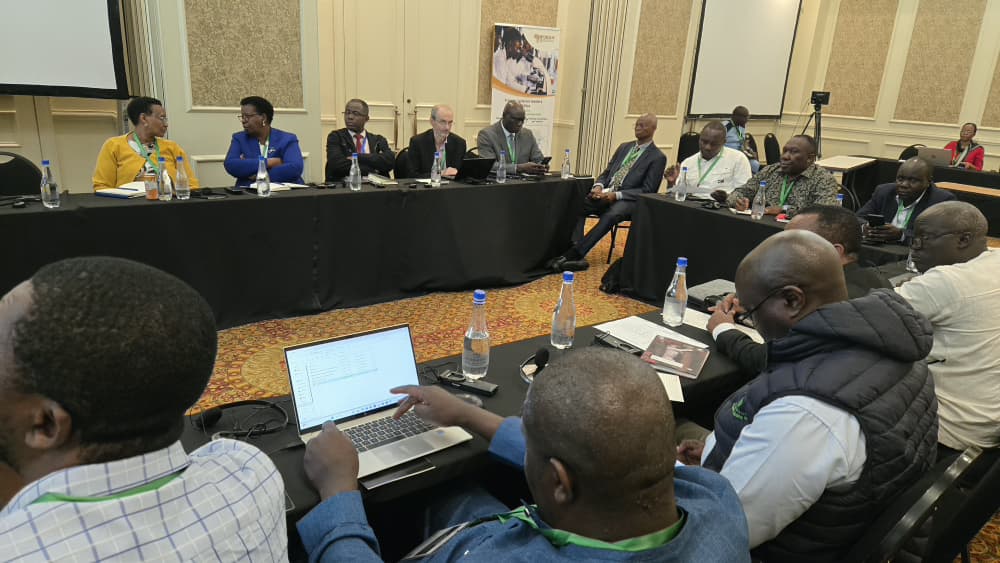
As the session drew to a close, participants left with a renewed sense of purpose and a more precise roadmap for action. The rich insights shared by university leaders, policymakers, and ministers equipped delegates with practical solutions to strengthen their institutions, ranging from curriculum reforms and research partnerships to digital innovation, early-warning systems, and community-anchored resilience programmes. The meeting reaffirmed that Africa’s universities are not passive observers but key architects of the continent’s food systems transformation. With strengthened collaboration, shared learning platforms, and coordinated investment, the knowledge institutions represented at the RUFORUM Annual General Meeting are now better positioned to drive resilience, stability, and sustainable development across fragile and prosperous regions alike.