
The session, themed “Knowledge, Learning, and Innovation Systems for Agrifood Transformation in Africa,” was convened on 28 July under Sub-Theme 1 of AASW9, “Emerging Agricultural Technologies and Innovations.” It was organized jointly by the African Union Commission (AUC), the CAADP-XP4 Consortium (FARA, AFAAS, ASARECA, CORAF, CCARDESA & NAASRO), CGIAR, BMFTR supported INTERFACES Project, the KM4AgD Community of Practice and ARCN, and moderated by Benjamin Abugri, FARA’s Cluster Lead for Knowledge Management, Digitalisation and Learning, and Convener of the KM4AgD CoP, and Tsehay Gashaw, Knowledge Management Specialist of ILRI.
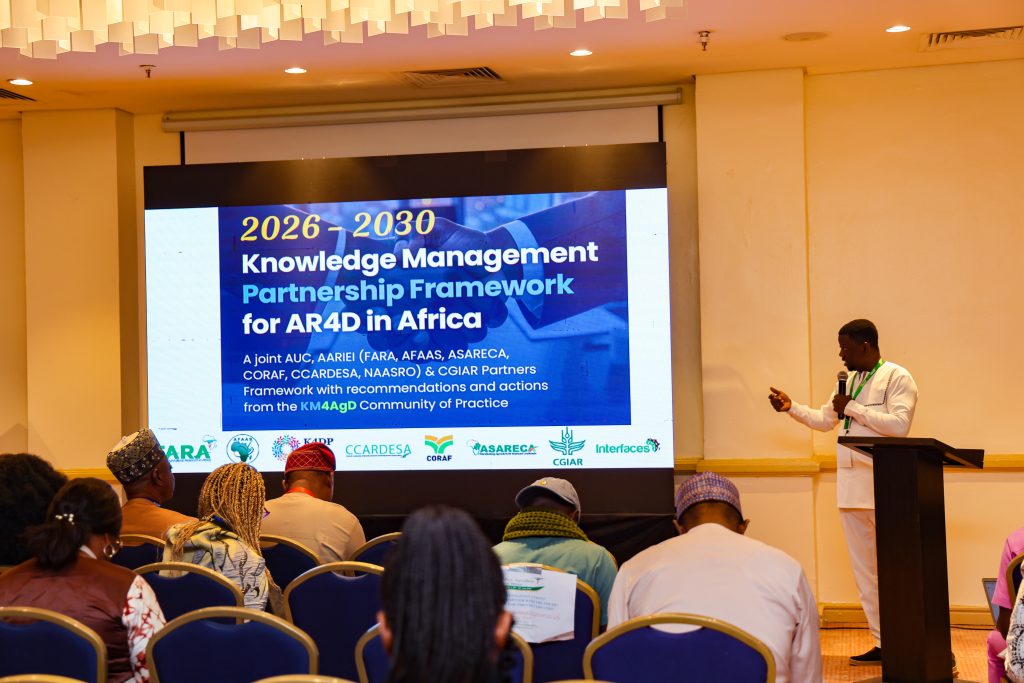
Mr Benjamin Abugri
The renewed Knowledge Management Partnership Framework for Agricultural Research for Development (AR4D) in Africa updates a first framework signed at the 8th Africa Agriculture Science Week in Durban in 2023 by the same partners. That framework expired in December 2025. Partners said the new 2026–2030 phase responds to the Kampala CAADP Declaration and the CAADP Strategy and Action Plan 2026–2035, which provide for a CAADP Knowledge Management Support System.
Endorsed jointly by the AUC, FARA, AFAAS, ASARECA, CCARDESA, CORAF and CGIAR, the framework commits partners to treating knowledge management as a driver of adaptive learning, implementation intelligence and evidence-informed scaling, supported by stronger digital and AI-enabled knowledge infrastructure and by more deliberate integration of indigenous and local knowledge alongside formal science. By 2030, the partners said they expect stronger institutionalisation of knowledge management across AR4D institutions, a more accessible African agricultural knowledge infrastructure, and clearer evidence that knowledge management contributes to innovation scaling and institutional change.
Presenting CGIAR’s Scaling for Impact approach, Solomon Gizaw of the Scaling for Impact Program and the Technologies for African Agricultural Transformation (TAAT) programme said scaling requires more than expanding the reach of a technology. He said it depends on understanding farmers’ realities, strengthening the institutions around them, building strategic partnerships, and embedding innovations within the food, land and water systems that farmers navigate simultaneously. He cited climate-smart, pest- and disease-resistant crop varieties, the biological aflatoxin control product Aflasafe, digital tools supporting fish farmers’ decision-making, youth agripreneurship programmes, and the conversion of cassava peels into livestock feed as evidence that CGIAR science is already delivering impact, while noting that sustainable adoption at scale remains the harder task.
A panel discussion moderated by Dr. Namukolo Covic, Head of the CGIAR Liaison Office for Africa, and joined by Prof Tilahun Amede of AGRA, IITA Deputy Director General for Partnerships and Delivery Dr Tahirou Abdoulaye, and HarvestField Industries CEO Dr Abdullahi Ndaruba, examined what it will take to scale innovation across the continent. Panelists agreed that scaling depends on stronger relationships among research institutions, governments, financial institutions, extension services, agribusinesses and farmer organisations, rather than on any one actor working alone.
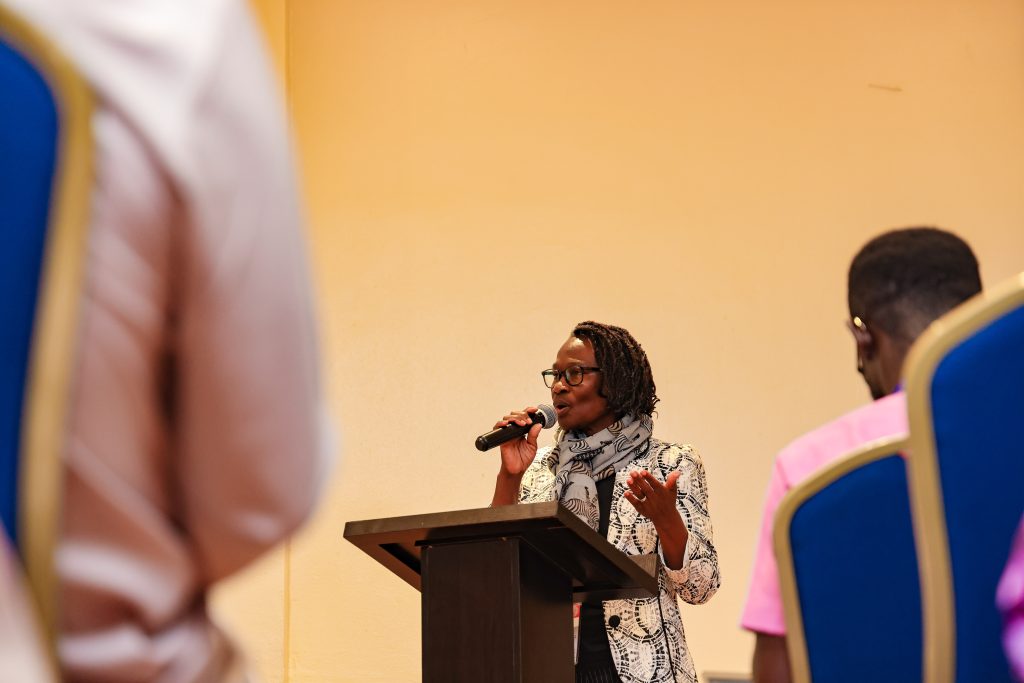
Dr Namukolo Covic
Professor Lateef Sanni said agricultural transformation requires researchers and the private sector to move beyond working in silos and co-create solutions across the full innovation pathway, from research and production through to markets and long-term sustainability. He called for farmers and entrepreneurs to play a more active role in shaping research priorities.
Dr. Ndaruba said innovations must be designed with end users in mind from the outset if they are to achieve adoption, and argued that researchers should see themselves as service providers to farmers and agribusiness entrepreneurs, not only as generators of knowledge. He said technologies need to be accompanied by practical information on packaging, commercialisation, market opportunities and value chain linkages.
From the floor, a young farmer challenged participants to ensure that agribusiness summits produce outcomes that outlast the conference hall. He questioned the administrative processes, including proposal and concept note submissions, that farmers and young entrepreneurs are often required to navigate before accessing opportunities or support, and called for simpler, more accessible pathways to knowledge, technologies and services.
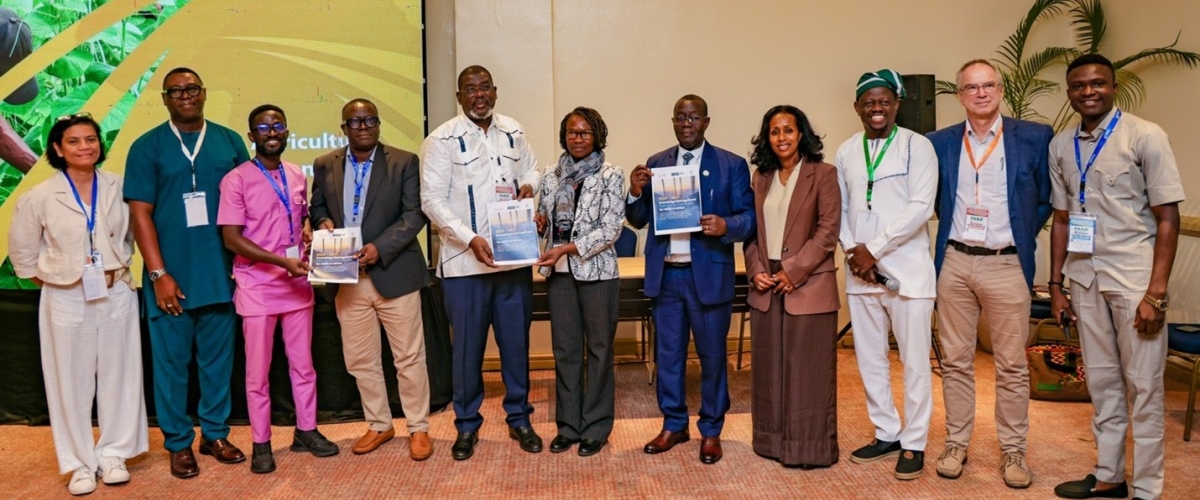
To demonstrate the role of knowledge management within the 2023-2025 KM Partnership implementation period and the impact of the KM4AgD agenda for the continent, the German government-supported Sustainable Land Management for Sub-Saharan Africa (INTERFACES) Project used the occasion to pre-launch the knowledge synthesis report. The final report will be published in the coming months.
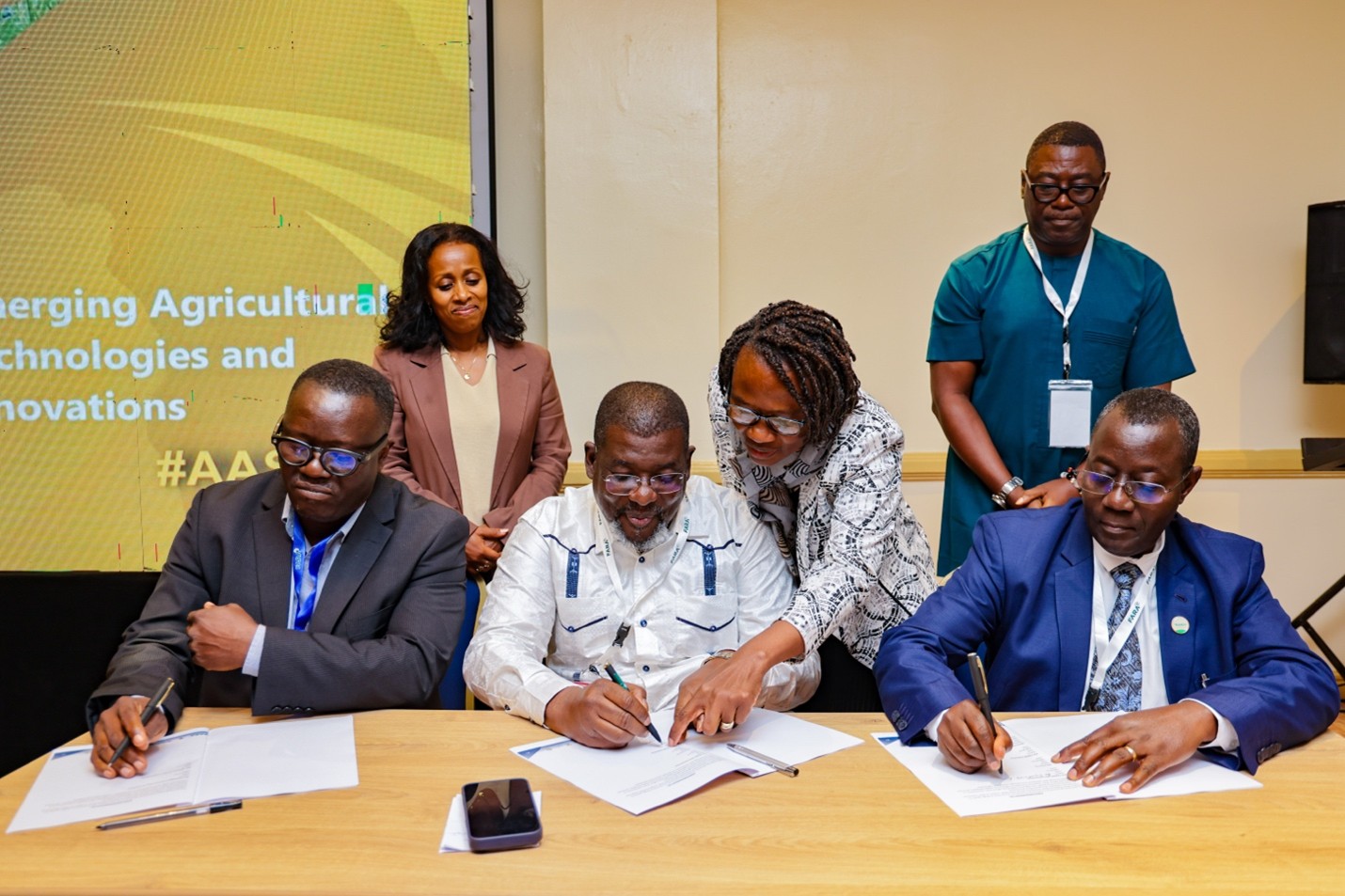
The session closed with the signing of the renewed Knowledge Management Partnership Framework for AR4D in Africa (2026–2030) by representatives of the AUC, CAADP-XP4 Consortium and the CGIAR.