
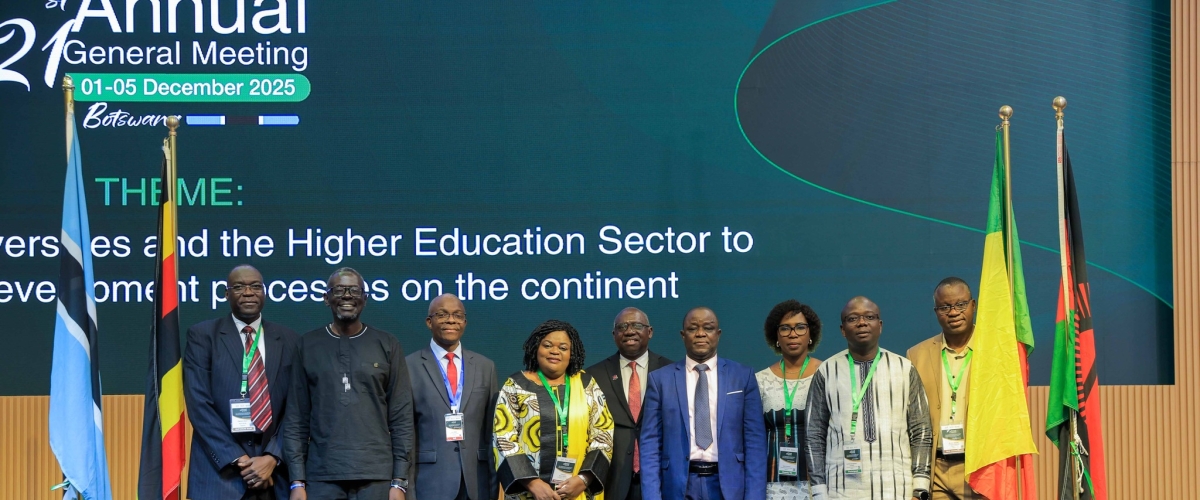
The Comprehensive Africa Agriculture Development Program for EX-Pillar 4 (CAADP-XP4), and partners at the 21st RUFORUM Annual General Meeting (AGM) for the official launch of RUFORUM’s West Africa and Southern Africa Regional Nodes. This was a significant step toward enhancing coordination, innovation, and capacity-building across more than 170 universities in Africa. The event, convened at the Gaborone International Convention Centre (CICC), brought together governments, universities, regional bodies, and development partners on 2nd December 2025.
During the launch, Prof. Patrick Akori, RUFORUM Executive Secretary, underscored the importance of generating knowledge that directly contributes to societal transformation. He encouraged teams from Central, West, South, and East Africa to publish research papers that not only deepen academic inquiry but also show how knowledge is being translated for the benefit of wider communities. He discouraged universities from relying on limited datasets and implored them to explore alternative research pathways that strengthen evidence-based decision-making.
Prof. Akori emphasized the need to invest in effective knowledge-sharing and transfer mechanisms, highlighting the collaboration between AFAAS and RUFORUM as a strategic bridge for scaling innovations across Africa. “The keyword now is investment, and it is more critical than ever before,” he stressed. Concluding his remarks, he quoted Theodore Roosevelt: “Keep your feet on the ground and your eyes on the sky.” He explained that this calls on institutions to remain grounded in reality while aspiring toward high-impact innovation.
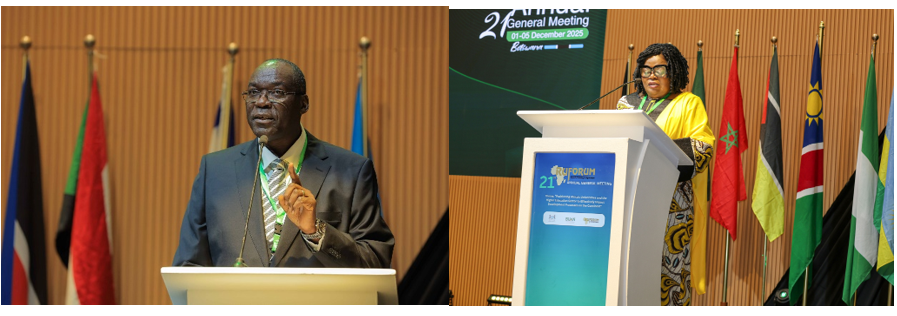
The RUFORUM Board Chair Professor Theresia Nkuo-Akenji applauded Malawi and Benin for hosting the two new regional hubs, noting that their leadership strengthens regional research coordination. The University of Malawi expressed excitement at hosting the Southern Africa Regional Hub, building on its experience hosting World Bank–supported centres and other research initiatives. Speaking at the event, the Deputy Minister of Higher Education (Malawi) emphasized the urgency of working together and called on universities to make data-driven decisions, shifting from merely counting graduates to designing innovative solutions that transform societies, and urged all stakeholders to remain committed to transformation.
Representing Uganda’s Minister of Education, who is also the country’s First Lady, the Ugandan delegation further highlighted the importance of decentralisation as a driver of inclusive, accessible, and impactful higher education systems across the continent. The new hubs hosted by the University of Abomey-Calavi (Benin) and Lilongwe University of Agriculture and Natural Resources (LUANAR), Malawi, were launched by the RUFORUM Board to strengthen subregional operations, improve responsiveness to member institutions, and establish functional Country Forums that link universities to national innovation systems. These hubs will help manage RUFORUM’s expanding network and facilitate collective action across the continent.
The CAADP-XP4 Representatives gave powerful solidarity messages. Dr. Lilian Lihasi, Executive Director of AFAAS, described the launch as “a defining moment for Africa.” She emphasized that the hubs represent more than administrative structures; they symbolize a new era of African-led coordination, African-led knowledge generation, and African-led innovation.
Dr Lilian highlighted the enormous synergy between RUFORUM’s Regional Nodes and AFAAS’s Country Fora, noting that these hubs bring proximity, agility, and partnership power, critical qualities for strengthening Africa’s agricultural knowledge and innovation ecosystem.
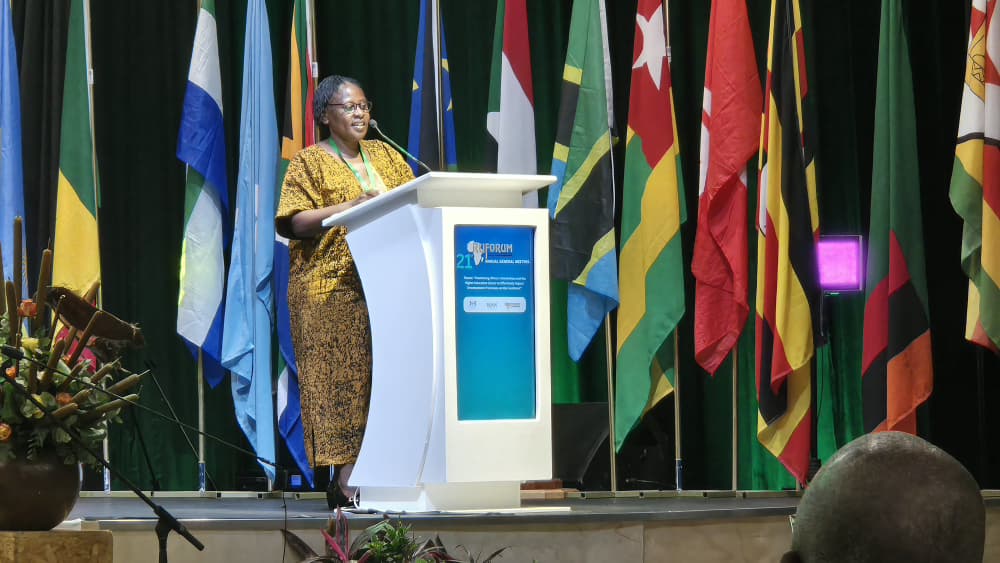
Dr. Lihasi issued a call to action to build hubs that lead, inspire, and turn knowledge into livelihoods, and to work as a united African innovation system committed to transforming food systems and empowering farmers, youth, and scientists.
Representing Dr Aggrey Agumya, the Executive Director from the Forum for Agricultural Research in Africa (FARA), Prof. Oluwole Fatunbi, Acting Director for Research and Innovation, reaffirmed the importance of research and innovation as the backbone of Africa’s agricultural transformation agenda. He said that FARA stands in full solidarity with RUFORUM as it inaugurates its regional hubs, an important milestone in strengthening Africa’s agricultural knowledge and innovation systems. As Marcus Aurelius reminds us, “What brings no benefit to the hive brings no benefit to the bee.” Our shared progress strengthens us all.
Prof Fatubi applauded RUFORUM’s leadership in establishing decentralised nodes that deepen sub-regional coordination and empower universities across the continent. This work reflects the virtue of right action, for, in the words of Aurelius, “If it is not right, do not do it; if it is not true, do not say it.” FARA reaffirms its commitment to collaborate with RUFORUM and its hubs to advance research, innovation, youth development, and capacity-building. We embrace the wisdom that “The impediment to action advances action; what stands in the way becomes the way.” Together, we turn challenges into platforms for transformation.
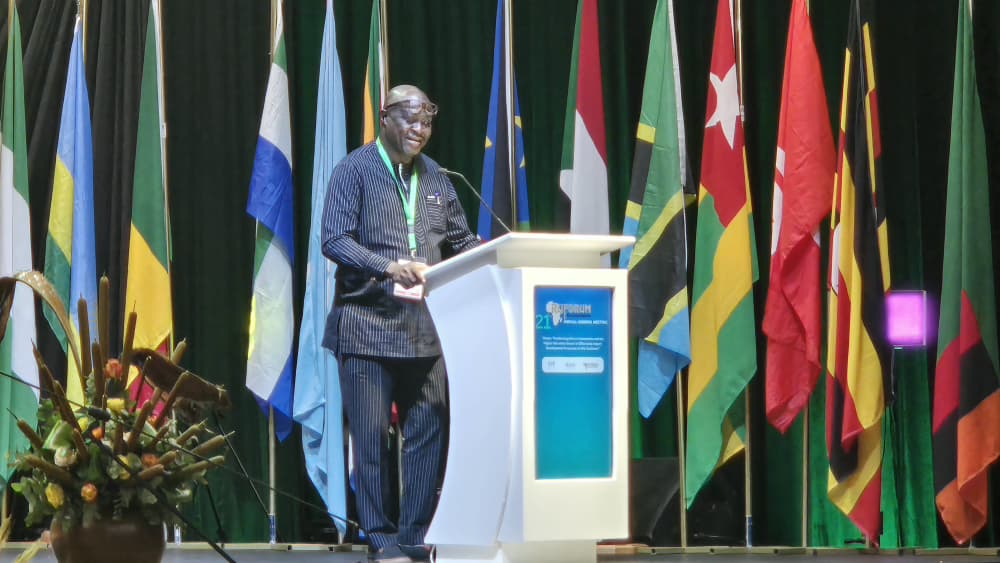
The regional hubs resonate with FARA’s mission to strengthen collective action, foresight, and science–policy integration. We are mindful that “What we do now echoes in eternity,” reminding us that these institutional investments shape Africa’s long-term agricultural future.
We celebrate this historic launch and pledge to walk alongside RUFORUM in ensuring the hubs become engines of excellence and shared impact. In this spirit of renewed purpose, we remember Aurelius’ counsel: “When you arise in the morning, think of what a precious privilege it is to be alive—to breathe, to think, to enjoy, to love.” Today is a privilege to build Africa’s future together, Prof Fatubi concluded.
CCARDESA Executive Director Prof. Cliff Dlamini, represented by Dr. Bridget Kakuwa-Kasongamulilo, congratulated Benin and Malawi for their leadership in hosting the hubs. She emphasized that establishing the nodes comes at a critical moment, when Africa must strengthen coordination, accelerate innovation, and build resilient food systems that draw on university-led science, extension knowledge, and farmer-driven solutions.
Dr. Kakuwa-Kasongamulilo highlighted strong alignment between the RUFORUM hub model and CCARDESA’s mandate, particularly in knowledge sharing, capacity building, climate resilience, and digital agriculture. She noted that CCARDESA’s ongoing work through the Soil Health and Fertiliser Hub presents an immediate opportunity for collaboration to scale climate-smart soil health solutions, strengthen evidence-based decision-making, and enhance regional learning platforms.

She reaffirmed CCARDESA’s commitment to advancing joint efforts that improve food security, enhance knowledge flow, empower youth and women, and build resilient agricultural innovation systems across SADC and the continent. Dr. Kakuwa-Kasongamulilo concluded that the hubs will help move the region's knowledge more smoothly, faster, strengthen innovation systems, and ensure that African universities take their rightful place at the centre of food systems transformation.
During the plenary on Framework for Leveraging Existing and New Opportunities with African Agricultural, Research, Innovation and Education Institutions, Panelists underscored the importance of strengthening regional research networks and fostering innovation pathways that respond directly to farmers’ needs. ASARECA’s Ms. Julian Barungi highlighted the centrality of collaboration with RUFORUM, noting the collaboration with RUFORUM through capacity building, scaling proven agricultural technologies to ensure they reach farmers, creating an enabling policy environment for scaling agricultural technologies and innovations, knowledge management and sharing of experiences across countries, and then joint resource mobilization.” The discussion converged on a shared thought piece: strengthening continental frameworks to harmonize efforts, accelerate the uptake of innovations, and position Africa’s agricultural education and research institutions as engines of transformative change.
Africa’s transformation depends on coordinated, knowledge-driven agricultural systems that empower universities, research institutions, extension services, and farmers. With the operationalization of the regional hubs, RUFORUM and its partners enter a new chapter of collaboration, impact, and continental integration.