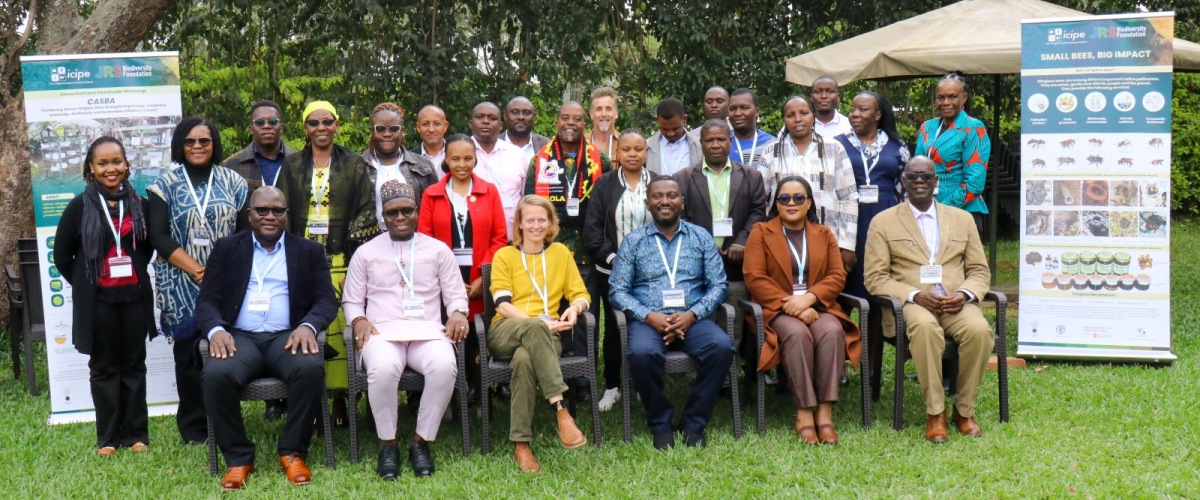
The Centre for Coordination of Agricultural Research and Development for Southern Africa (CCARDESA) joined regional and international partners at the Conserving African Stingless Bees: Strengthening Ecology, Indigenous Knowledge, Biodiversity and Sustainable Utilization (CASBA) Project Consortium and Stakeholder Workshop held from 30 June to 2 July 2026 at Sportview Hotel in Nairobi, Kenya. The workshop was convened by the International Centre of Insect Physiology and Ecology (ICIPE) and brought together researchers, policymakers, academia, development partners, private sector actors, farmers and representatives from regional organizations to strengthen collaboration on the conservation and sustainable utilization of African stingless bees.
The CASBA project seeks to establish and operationalise a Pan-African consortium dedicated to advancing research, conservation, sustainable use, and commercialization of stingless bees while strengthening biodiversity conservation, food security, climate resilience, and rural livelihoods across Africa.
In his official opening remarks, Dr. Subramanian Sevgan, Principal Scientist and Head,. Environmental Health Theme stated that, "The CASBA initiative is more than a research project; it is a continental movement to conserve Africa's stingless bees while unlocking their immense potential to support biodiversity conservation, sustainable agriculture, climate resilience, and improved livelihoods. Through collaboration, we can transform scientific knowledge into practical solutions that benefit communities across Africa."
Dr. Nkoba Kiatoko, the Research Scientist in ICIPE's Environmental Health Theme, mentioned that "the strength of the CASBA Consortium lies in its diversity. By bringing together researchers, regional organizations, governments, academia, traditional knowledge holders, farmers, development partners, and the private sector, we are creating a strong platform to safeguard pollinators and promote sustainable utilization of stingless bee resources."
Representing CCARDESA, Ms. Futhi Magagula, the Special Projects Coordinator, delivered a presentation highlighting opportunities to integrate stingless bee research and development into the Southern African Development Community (SADC) agricultural research and innovation agenda. She emphasized that “stingless bees play a strategic role in supporting sustainable food systems, enhancing pollination services, conserving biodiversity, generating alternative livelihoods, and strengthening climate-resilient agriculture within the region”.
The workshop underscored the significant contribution that stingless bees can make towards achieving multiple regional and continental development priorities, including sustainable agriculture, ecosystem restoration, biodiversity conservation, climate adaptation, nutrition improvement, youth and women empowerment, and rural enterprise development. Participants recognized that stingless beekeeping presents a promising opportunity for income diversification while simultaneously strengthening ecosystem services through improved pollination.
The workshop concluded with renewed commitments from consortium partners to strengthen coordination, foster interdisciplinary research, and enhance collaboration across Africa to conserve stingless bees and unlock their potential contributions to sustainable development.