
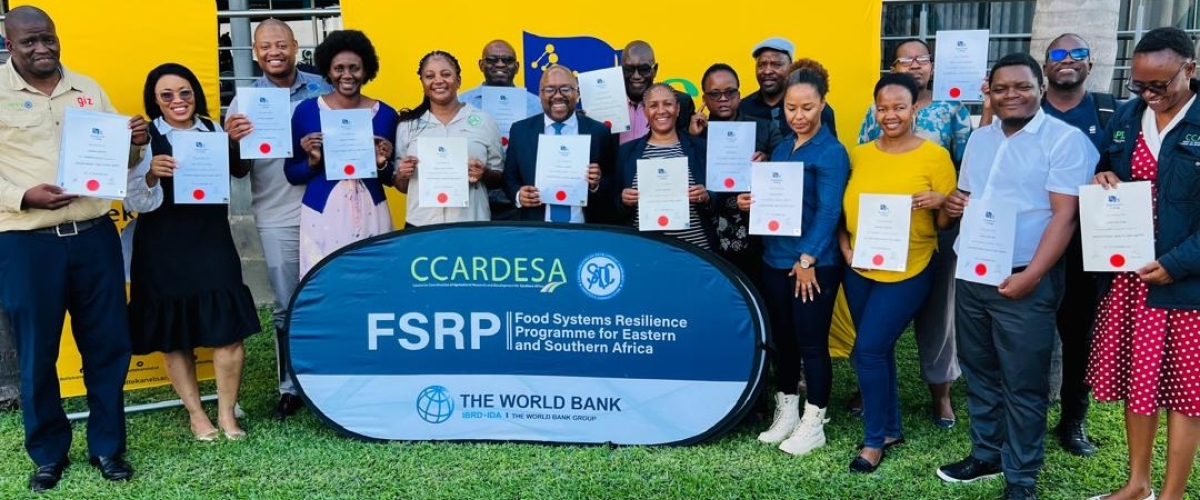
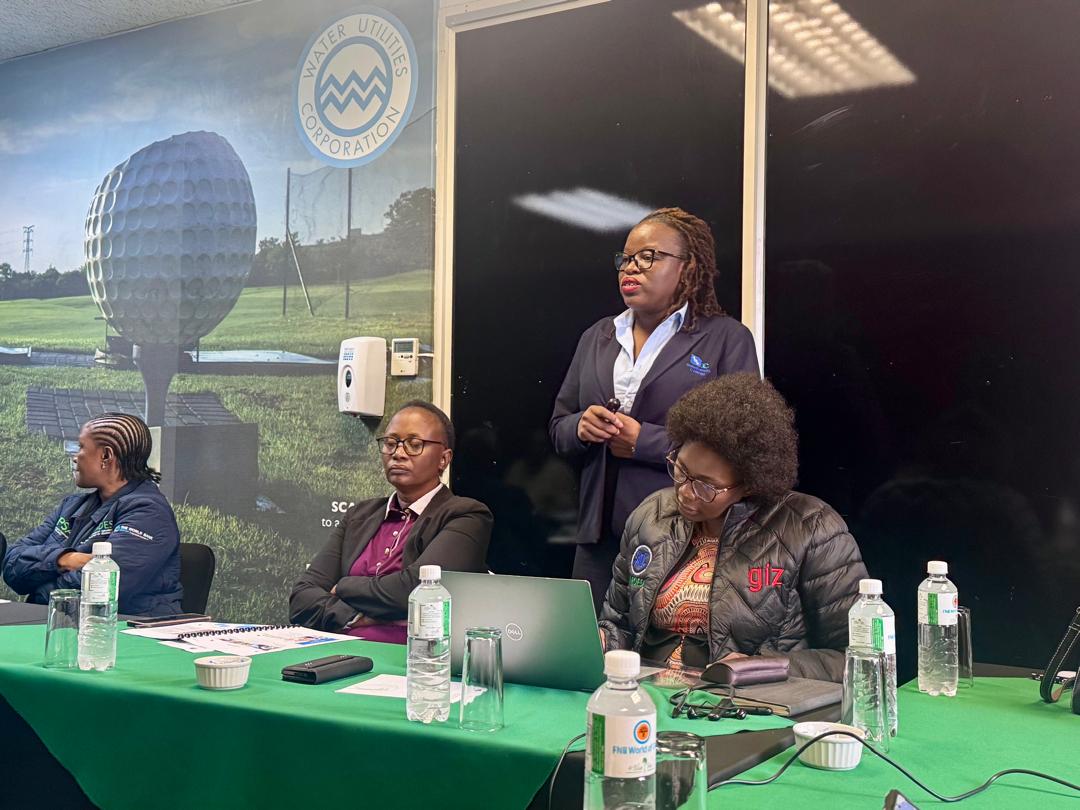
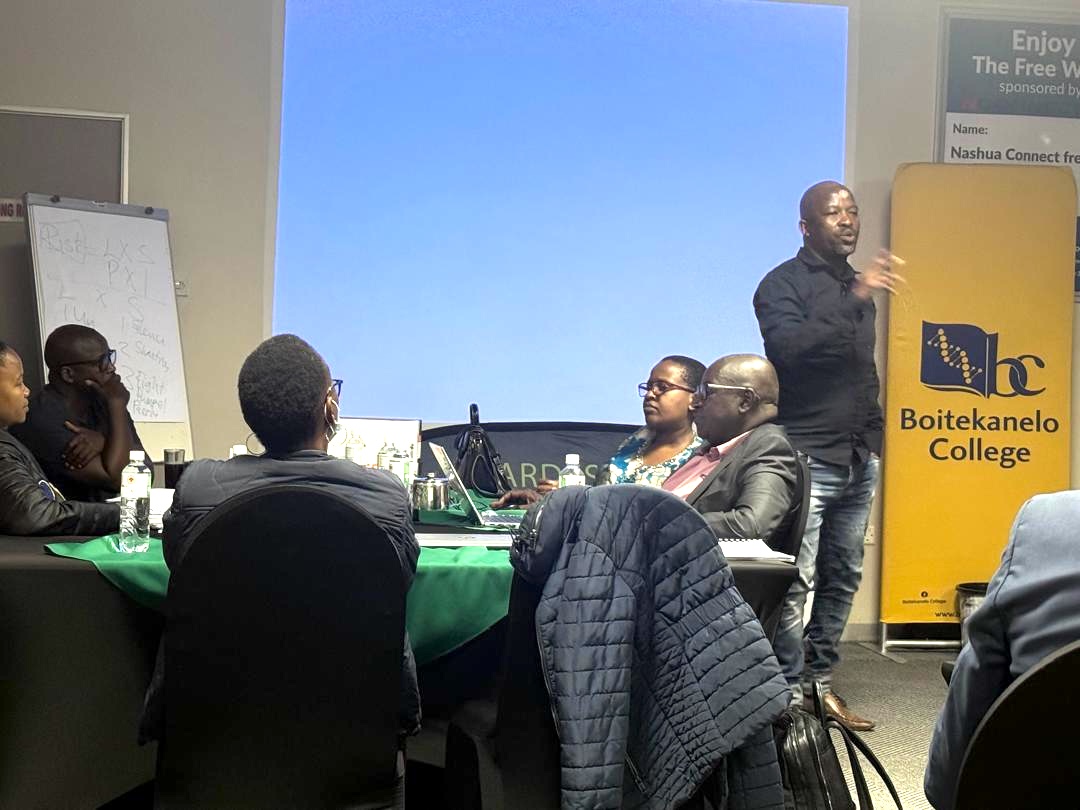
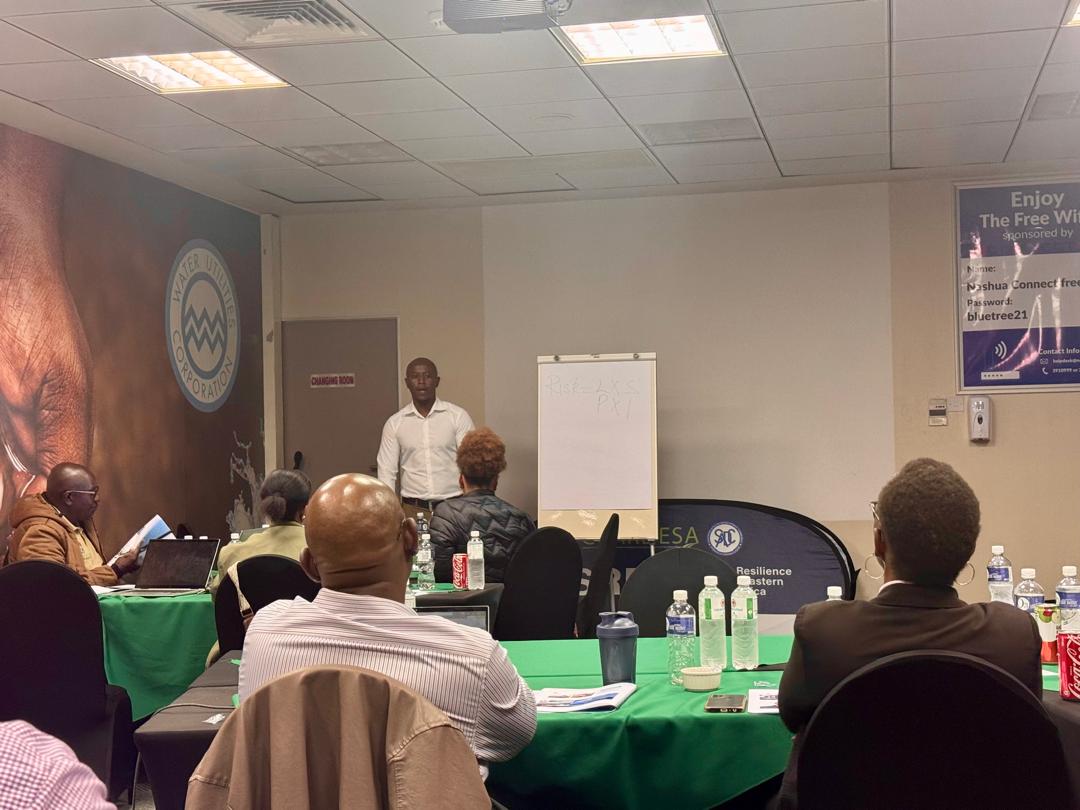
Staff of the Centre for Coordination of Agricultural Research and Development for Southern Africa (CCARDESA) recently completed a three-day intensive training in Occupational Safety, Health, and Environment (SHE) held in Gaborone, Botswana, from 3 to 5 November 2025. The training, conducted under the World Bank–funded Food Systems Resilience Programme (FSRP), was facilitated by experts from Boitekanelo College.
The training aimed to strengthen CCARDESA’s institutional capacity by equipping staff with the knowledge and skills to integrate occupational health and safety considerations into their daily operations and project implementation processes, in line with international best practices and regulatory frameworks.
Established by the Southern African Development Community (SADC) in 2010, CCARDESA coordinates agricultural research and development across 16 member states. Through regional programs such as the Agricultural Productivity Programme for Southern Africa (APPSA), the Food Systems Resilience Programme (FSRP), and the Accelerating Impacts of CGIAR Climate Research for Africa (AICCRA), the organisation contributes to sustainable agricultural transformation across the region. All these initiatives are supported by the World Bank and are implemented under the World Bank’s Environmental and Social Framework (ESF), which places strong emphasis on occupational health, safety, and environmental management.
For CCARDESA, SHE training is not only a regulatory obligation but an ethical commitment to safeguard its staff and contractors. The initiative underscores the organisation’s dedication to fostering a safe and secure work environment in accordance with the World Bank’s Environmental and Social Standard 2 (ESS2), the Environmental, Health, and Safety Guidelines (EHSGs) of the International Finance Corporation, ISO 45001 standards, and Botswana’s occupational health and safety regulations.
Experts from Boitekanelo College guided participants through critical areas of workplace safety management, including risk assessment, hazard identification, emergency preparedness, use of personal protective equipment (PPE), and incident reporting and analysis. The sessions were interactive and practical, featuring real-life case studies tailored to CCARDESA’s operational context.
By the end of the training, participants demonstrated an improved understanding of how to identify and mitigate workplace risks, incorporate safety standards into contracts, and promote a culture of proactive compliance.
The Occupational Health and Safety training marks a significant step in CCARDESA’s ongoing efforts to enhance institutional efficiency and staff wellbeing. It also reinforces the organisation’s commitment to responsible and compliant program delivery under the World Bank’s Environmental and Social Commitment Plan (ESCP).
 |  |  |