
ULAANBAATAR, Mongolia, 24 August 2026 — Conservation programmes are more likely to succeed when communities help design, implement and monitor them, and benefit directly from the results, a UNCCD COP17 side event heard in Ulaanbaatar affirmed.
The session, “Community-Based Natural Resource Management: Policy, Finance, and Local Leadership,” brought together government officials, conservation organisations, local leaders and herder representatives to discuss sustainable natural resource management.
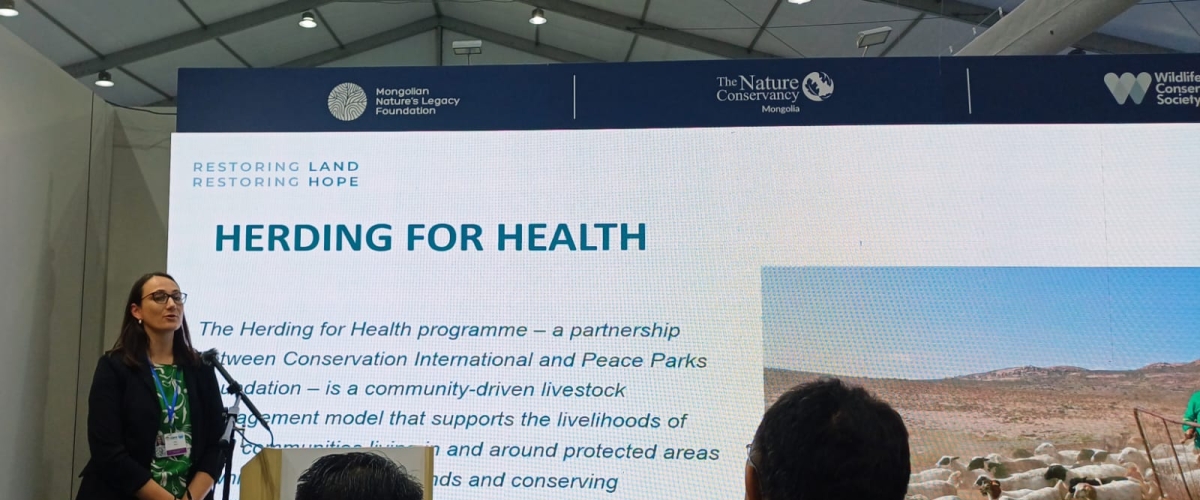
The event was organised by Mongolia’s Ministry of Environment and Climate Change, the Mongolian Nature’s Legacy Foundation and The Nature Conservancy, with the Wildlife Science and Conservation Center as a co-organiser. It also introduced Mongolia’s draft Long-Term Strategy and Action Plan for Strengthening Community-Based Natural Resource Management (2026–2040). In a presentation titled, “Local Stewardship, Lasting Impact,” Ms. Corle Swart, Community Stewardship Director at Conservation South Africa, part of Conservation International, shared lessons from community-led conservation in Southern Africa.
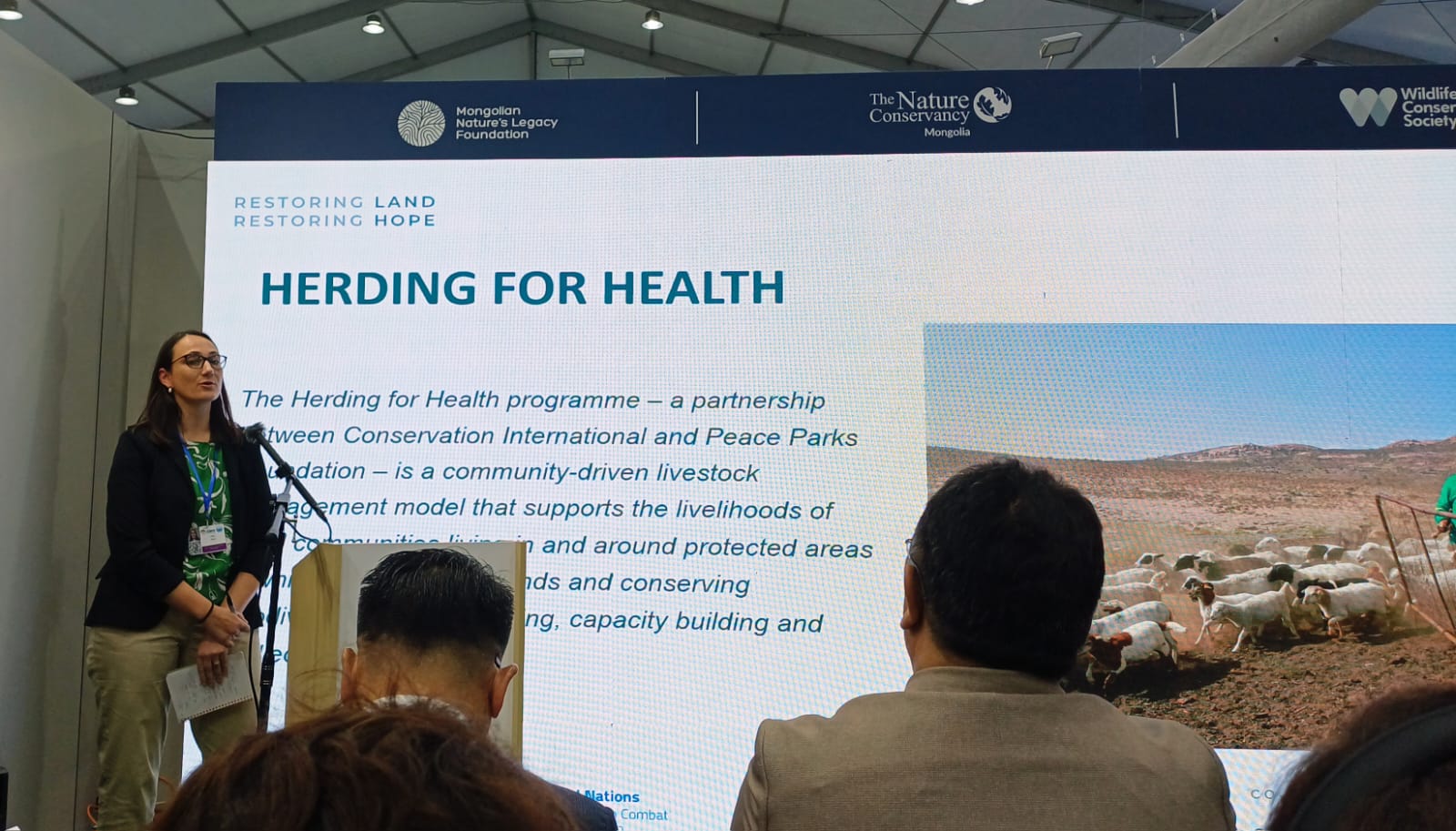
Ms. Swart highlighted the Conservation Stewards Programme, Conservation International’s global platform for connecting biodiversity conservation, climate resilience and sustainable livelihoods through voluntary agreements negotiated with communities.
The programme has worked for more than 20 years across nearly 30 countries. It supports over 150,000 local stewards managing almost six million hectares under improved conservation and stewardship arrangements.
Ms. Swart also presented lessons from Herding for Health, a partnership between Conservation International and Peace Parks Foundation. The community-driven model combines planned grazing, livestock management, capacity-building and collective governance to restore rangelands while improving rural livelihoods.
Using the Kruger-to-Canyons landscape in South Africa as an example, she explained how the initiative had expanded from four to 17 villages and from 19 to 69 grazing camps. The area under improved management increased from 7,916 to 19,678 hectares, involving approximately 1,505 farmers and 13,736 cattle.
Communities developed grazing plans and conducted quarterly assessments of rangeland and livestock condition. Farmer cooperatives also encouraged members to comply with agreed practices, including livestock dipping, inspections and herd assessments. These responsibilities are gradually shifting from project teams to community institutions, helping local people take ownership of activities beyond individual funding cycles.
Governance comes first
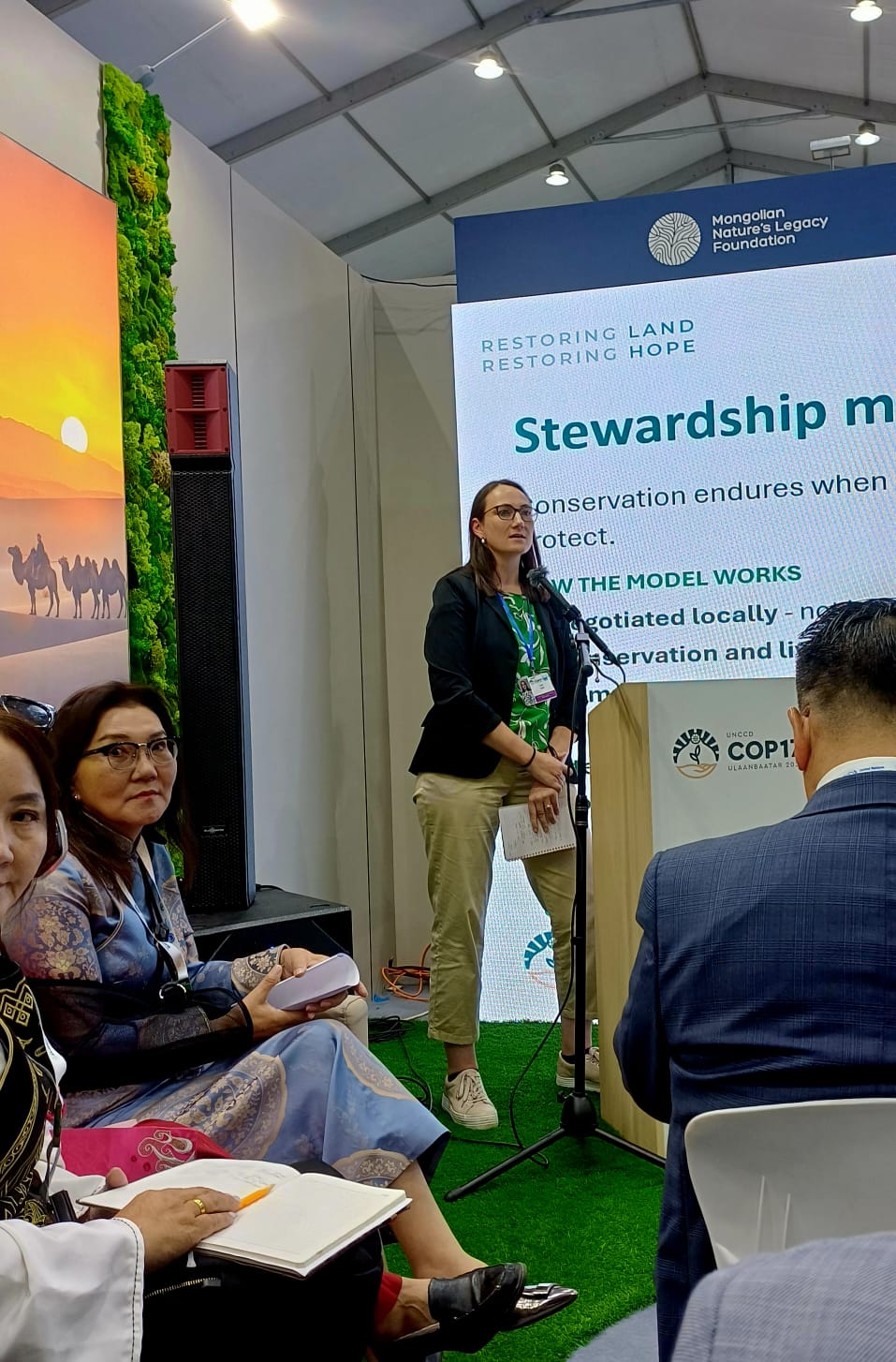
Ms. Swart identified five lessons from the programme: establish strong governance, connect conservation to livelihoods, make benefits visible, build partnerships among communities and institutions, and transfer ownership to local structures. “Conservation lasts when governance is locally owned, livelihoods benefit directly and communities become stewards, not beneficiaries,” she said.
The panel discussion brought together officials from Mongolia’s environment, agriculture and finance ministries, the Mongolian Nature’s Legacy Foundation, local government and a herder household association. Their participation connected national policy and financing discussions with the experiences of local authorities and herding communities. The session demonstrated that restoring land is not only a technical undertaking. It requires trusted local institutions, viable livelihoods, supportive policies and financing that continues long enough for communities to achieve lasting change.
land.
The IKI Growing Greener programme is funded by the German Federal Ministry for the Environment, Climate Action, Nature Conservation and Nuclear Safety through the International Climate Initiative (IKI). Its consortium partners are GIZ, CCARDESA, Peace Parks Foundation and Conservation South Africa.
https://www.ccardesa.org/ccardesa-herding-health-h4h-knowledge-management-project