By Upile Faith Muhariwa
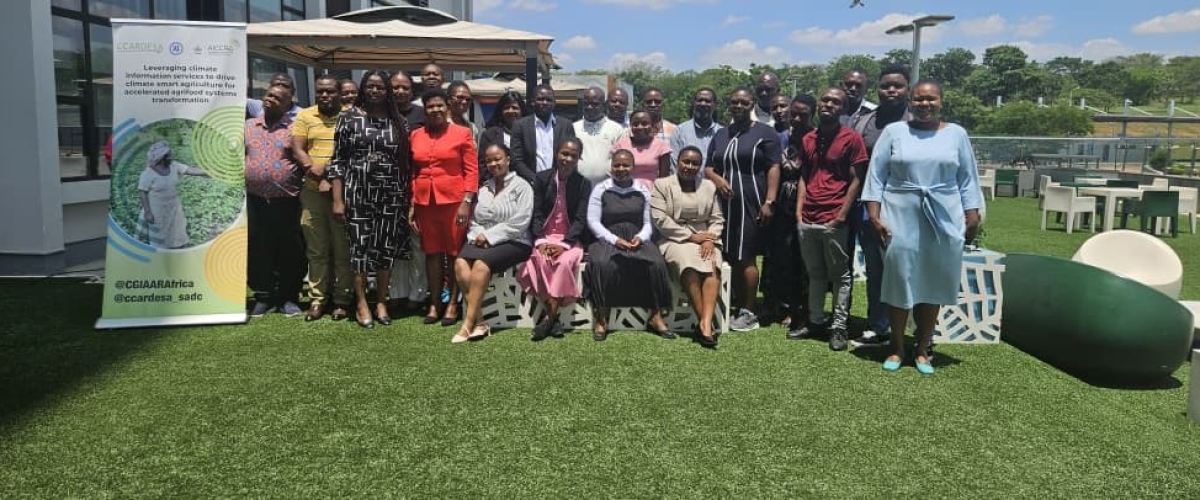
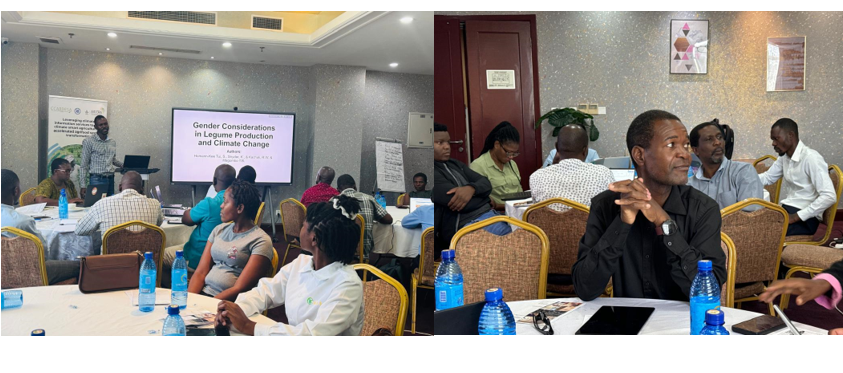
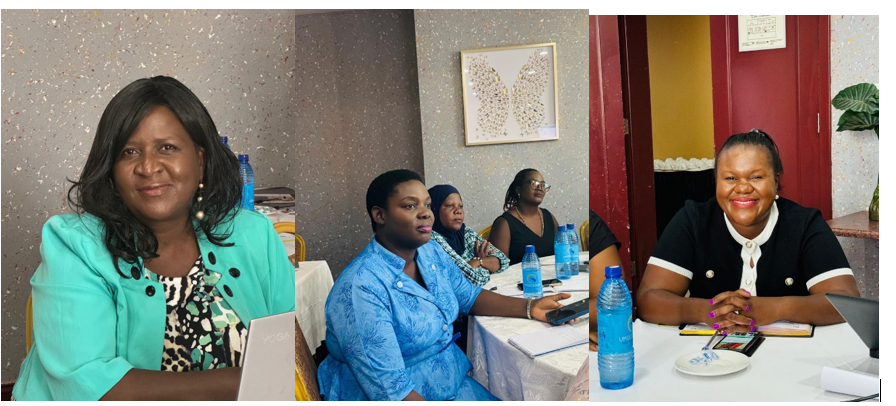
The Accelerating Impacts of CGIAR Climate Research in Africa (https://aiccra.cgiar.org/) project supported the Validation of the Malawi National Climate-Smart Legume Production Guide Workshop, which took place from 23rd to 25th November, 2025 at the Bingu International Conference Centre (BICC) in Lilongwe, Malawi. The workshop ended with a strong commitment from government institutions, research organizations, and development partners to strengthen climate-resilient legume production across the country.
“Legumes such as groundnuts, beans, soybeans, and pigeon peas are central to Malawi’s food and nutrition security. They serve as an affordable source of protein, contribute significantly to household diets, improve soil fertility through biological nitrogen fixation, and provide income for millions of smallholder farmers, especially women. Strengthening climate-smart legume production is therefore essential for diversifying diets, reducing malnutrition, restoring soil health, and building resilience against climate shocks,” explained Dr. John Recha, Scientist-Climate Smart Agriculture Policy from International Livestock and Research during his opening remarks.
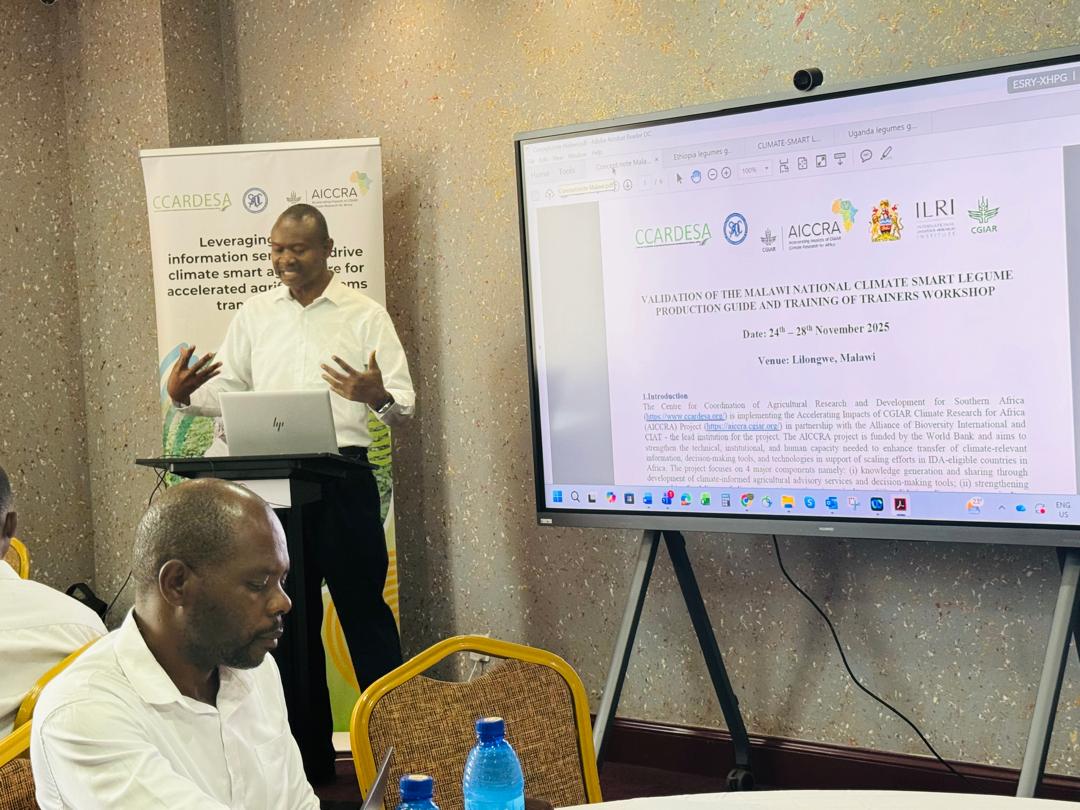
The two-day event brought together researchers, university professors, extension experts, seed companies, NGOs, farmer organizations, and private sector actors, providing a platform for technical review and refinement. Stakeholders validated the guide’s content and reviewed its technical recommendations to ensure accuracy, usability, and contextual relevance.
Speaking during the workshop, representatives from the Ministry of Agriculture Dr. Laurent Pungulani, Senior Deputy Director at the Department of Agricultural Research Services, emphasized that the guide comes at a crucial time when climate change continues to threaten Malawi’s food security through erratic rainfall, prolonged dry spells, and rising pest and disease incidence. The validated guide will equip farmers, extension officers, and practitioners with practical, climate-smart recommendations across the entire legume value chain from climate information services and GAPs to markets, mechanization, gender inclusion, and policy frameworks.

Following the successful validation process, Dr. John Recha (Research Scientist) highlighted the following steps
Step 1: Finalization, Editing, and Graphic Design: The technical team will consolidate all stakeholder inputs, refine the content, and work with professional editors and designers to produce a clear, user-friendly guide accessible to agricultural extension officers and practitioners at all levels.
Step 2: Preparation of the Foreword and Acknowledgements by the Ministry of Agriculture:
As the guide moves toward publication, the Malawi Ministry of Agriculture will provide an official foreword affirming national ownership and alignment with the country’s agricultural development priorities.
Step 3: Online Publication for Public Access: Once finalized, the Climate-Smart Legume Production Guide for Malawi will be uploaded online through CGSpace and CCARDESA website, ensuring that extension workers, policymakers, and value chain actors can access it freely.
A Major Step for Climate-Resilient Agriculture: The validated guide marks a significant milestone toward strengthening climate resilience, productivity, and farmer incomes in Malawi’s legume sector. With a trained cohort of national and district-level trainers ready to support dissemination, the country is well positioned to scale climate-smart legume practices nationwide and enhance both household nutrition and agricultural sustainability.
The AICCRA project is coordinated by the Centre for Coordination of Agricultural Research and Development for Southern Africa (CCARDESA) https://www.ccardesa.org/, in collaboration with the International Livestock Research Institute (ILRI). CCARDESA is a SADC subsidiary mandated to coordinate agricultural research and development efforts across the SADC region.
The author is the Knowledge Management and Communication Officer at SAPP Project 2 and also the CCARDESA ICKM Focal Point Person for Malawi