
When mineral fertiliser prices rise or deliveries are delayed, the first casualty is often not national production targets but household certainty: whether a family can plant on time, nourish its soil, and harvest enough to avoid a lean season. Across parts of Malawi, a practical, farmer driven solution is quietly reinforcing that certainty. Farmers call it Mbeya, a blended fertiliser made from local materials and a small amount of mineral fertiliser, prepared through fermentation and applied like a conventional input.
What is Mbeya?
Mbeya is an organo mineral fertiliser produced by mixing locally available ingredients such as maize bran, animal manure, ash, water, and a measured portion of mineral fertiliser. The mixture is sealed and left to mature, typically for 21 days, before application.
The Food and Agriculture Organization of the United Nations (FAO) documents one common formulation for a 50 kilogram bag as 21 kilograms of maize bran, 10 kilograms of pig dung, 10 kilograms of inorganic fertiliser, 10 kilograms of ash, and 5 litres of water. Other documented formulations in Malawi use similar proportions, often substituting chicken droppings for pig dung depending on availability.
According to IFAD documentation from Malawi, 10 kilograms of chemical fertiliser can produce one 50 kilogram bag of Mbeya, and one such bag is sufficient to fertilise about 0.4 hectares, with the mixture ready after approximately 21 days.
The arithmetic of resilience
Mbeya’s appeal lies in simple economics. FAO reports that one 50 kilogram bag of mineral fertiliser can produce five 50 kilogram bags of Mbeya. For households constrained by cash flow, this conversion significantly stretches purchased fertiliser. Instead of applying nothing in a difficult season, farmers can apply a blended input that maintains soil fertility at a lower cost.
In practical terms, Mbeya reduces the quantity of mineral fertiliser required per unit of product applied while maintaining nutrient supply through the addition of organic matter. This lowers direct expenditure on chemical fertiliser and cushions households against price volatility.
Historical development and validation
Mbeya emerged from farmer innovation under pressure. Smallholder farmers facing high fertiliser costs experimented with blending mineral fertiliser with organic materials already available on their farms. Over time, the practice spread informally.
Its transition from informal practice to recognised soil fertility option came through engagement with development and research actors. FAO supported community training and integration of Mbeya within broader soil and water management practices. As interest grew, Malawi’s public agricultural research system assessed the technology more formally.
Chitedze Agricultural Research Station, under the Ministry of Agriculture in Malawi, evaluated Mbeya based fertilisers for maize yield and yield components. Peer reviewed findings document composition, field performance, and the importance of proper formulation and quality control as uptake expands. The involvement by public research institutions has strengthened Mbeya’s technical credibility and anchored it within Malawi’s agricultural innovation system.
 | 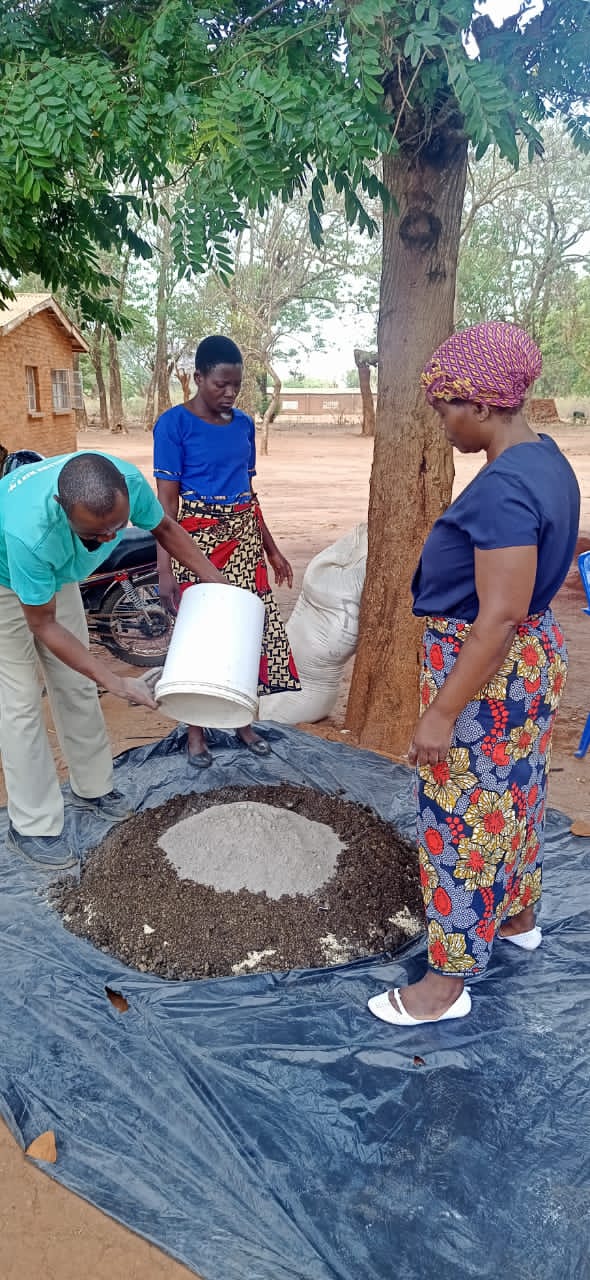 | 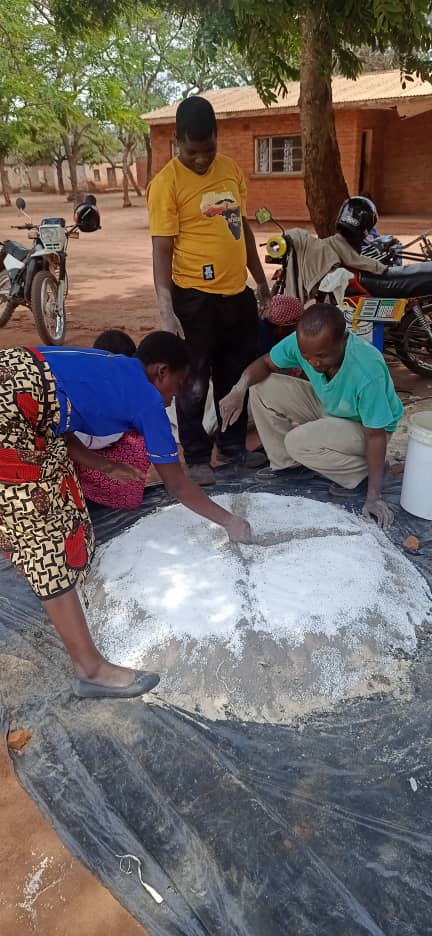 | 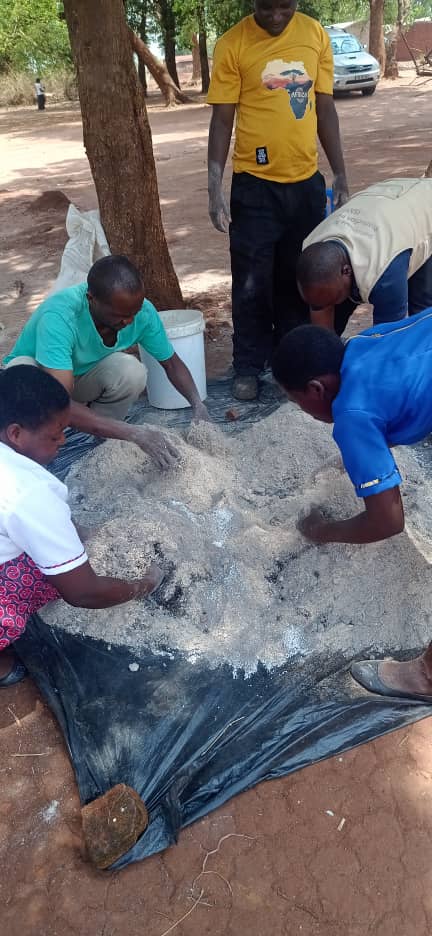 |
Photos: Dr Moses Munthali, Department of Agricultural Research Services (DARS)
Current contribution to food security
The contribution of Mbeya is visible at household level. In one documented case supported by FAO in Mzimba District, a farmer reported maize harvests increasing from 10 to 13 bags of 50 kilograms per acre before adopting Mbeya to about 40 bags of 50 kilograms per acre after integrating Mbeya alongside improved soil and water management practices.
Field studies in Malawi also show that combining Mbeya type manure with modest nitrogen fertiliser in maize systems following legumes significantly increased grain yields compared to mineral fertiliser alone.
Beyond yield, Mbeya contributes to soil improvement by adding organic matter, enhancing soil structure, and improving moisture retention. By recycling livestock waste and crop residues into productive inputs, it supports more sustainable soil management while reducing dependence on imported fertiliser.
Regional relevance and institutional context
Mbeya’s relevance extends beyond Malawi. Across Southern Africa, countries share similar vulnerabilities: dependence on imported mineral fertiliser, exposure to price shocks, and limited fiscal space for subsidies. Technologies that reduce reliance on full rates of mineral fertiliser while maintaining productivity offer a resilience pathway for smallholder systems.
It is worth noting that the Centre for Coordination of Agricultural Research and Development for Southern Africa (CCARDESA) is hosting the Regional Soil Health and Fertilizer Hub, mandated by the SADC Ministers responsible for Agriculture and Food Security, Fisheries and Aquaculture. The Hub serves as a regional platform to advance sustainable soil fertility management, strengthen knowledge exchange, support harmonised fertiliser policies, and promote innovation across Member States.
The operationalization of the Soil Health and Fertilizer Hub is currently supported through the Food Systems Resilience Programme (FSRP) for Eastern and Southern Africa, a World Bank funded initiative aimed at strengthening the resilience of food systems, enhancing regional collaboration, improving access to agricultural technologies, and promoting sustainable soil and fertiliser management.
Within such a regional framework, Mbeya represents more than a local practice. It illustrates how farmer innovation, backed by public research and aligned with policy, can become a scalable model. With clear technical guidelines, quality assurance systems, and integration into national extension services, Mbeya or similar organo mineral blends could be adapted across SADC countries where livestock manure, crop residues, and ash are readily available.
Lesson for SADC
Mbeya is not a substitute for mineral fertiliser. It is a strategic complement that reduces vulnerability. It enables households to fertilise fields even when markets are unstable. It improves soil health while moderating cash outlays. It also demonstrates the value of combining farmer ingenuity with institutional support.
As SADC countries intensify efforts to build resilient and sustainable food systems, Malawi’s experience with Mbeya offers one important practical lesson.
References for Further Reading
- FAO (Food and Agriculture Organization of the United Nations). Low cost, high impact: Affordable farming solutions for sustainable food security (Malawi case study featuring Mbeya fertiliser). https://www.fao.org/africa/news-stories/news-detail/low-cost-high-impact--affordable-farming-solutions-for-sustainable-food-security/en
- IFAD (International Fund for Agricultural Development). Climate Resilience Initiative – Malawi Case Study (includes Mbeya fertiliser description and application rates). https://www.ifad.org/documents/48415603/50429756/CRI_Malawi_W.pdf
- Ministry of Agriculture, Chitedze Agricultural Research Station (Malawi). Effect of Mbeya Organic Fertilizer on Maize Yield and Yield Components (peer reviewed study). https://journalaprj.com/index.php/APRJ/article/view/208
- Research Journal of Recent Sciences. Evaluation of Mbeya Based Organic Mineral Fertilizer on Maize Production in Malawi. https://www.isca.me/rjrs/archive/v13/i1/1.ISCA-RJRS-2021-029.pdf
- African Journal of Food, Agriculture, Nutrition and Development (AJFAND). Maize yield response to Mbeya manure and nitrogen fertiliser in Malawi. https://ajfand.net/Volume24/No11/Mhango24455.pdf
- Government of Malawi. National Fertiliser Policy. https://www.npc.mw/wp-content/uploads/2023/10/2021.03-National-Fertiliser-Policy-signed.pdf