By Dorcas Kabuya
Over 70 percent of Southern Africa’s population depends on rain-fed agriculture, making the region highly vulnerable to climate variability and extreme weather events.
Since climate change knows no borders, policymakers are being urged to adopt a harmonized regional framework and increase strategic investments in climate information services (CIS) to boost climate resilience in agriculture and strengthen institutional coherence across sectors.
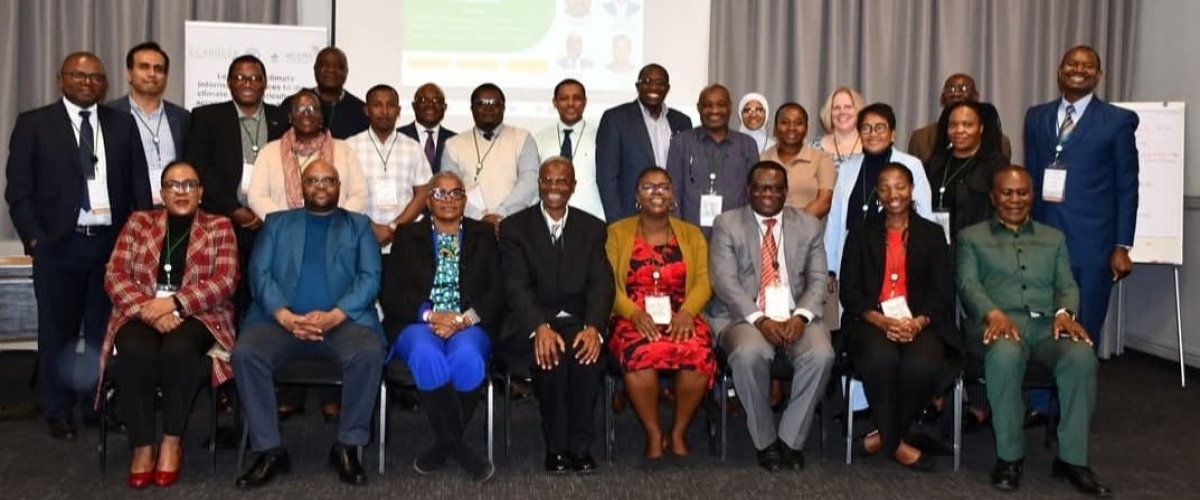
It is for this reason that the Centre for Coordination of Agricultural Research and Development for Southern Africa (CCARDESA) hosted a dynamic session on leveraging Climate Information Services (CIS) to drive Climate Smart Agriculture (CSA) in the SADC region.
CCARDESA Executive Director, Professor Cliff Dlamini underscored the importance of climate information services in promoting climate-smart agriculture across the region.
Professor Dlamini emphasized the crucial role that data plays in agricultural planning and decision-making, noting that without access to reliable climate services, farmers would struggle to adapt to climate change and variability, and consequently, improve productivity. He called for greater investment in localised climate information systems to support resilient and sustainable food production systems across the region.
“In order to manage something, you have to have information about it. You have to measure it. CIS speaks to climate data, the kind of data made available to farmers and other practitioners, which enables them to implement climate-smart agricultural practices effectively,” he said.
Delivering the keynote address, Dr. Ernest Afiesimama of the World Meteorological Organisation (WMO) underscored the vital role of Climate Information Services (CIS) in agricultural decision-making. He explained that CIS, encompassing the production, interpretation, and dissemination of weather and climate data, must be tailored to help farmers make concrete, timely decisions.
“CIS bridges science and action, guiding when to plant, irrigate, harvest, and even make livestock and insurance decisions,” he told the audience.
Using a practical example, Dr. Afiesimama illustrated the transformation of raw data into actionable knowledge: “Measuring 33 degrees with a thermometer is just data, but telling a farmer that this temperature exceeds optimal planting conditions and could lead to seed loss is transformative information. That’s when data becomes power.”
He proposed the establishment of a cross-border climate-smart agriculture platform to harmonise data, co-design advisories, and deliver early warnings throughout the region. Fragmented national systems, he warned, remain a major barrier to resilience. “Since climate change knows no borders, policymakers must treat it as a political priority that underpins food security, livelihoods, and regional stability.”
Dr. Afiesimama further recommended aligning CIS frameworks with National Adaptation Plans (NAPs), urging collaboration between regional institutions such as SADC and the WMO. He stressed the need for harmonisation, capacity building, and the co-development of agro-meteorological advisories in partnership with Ministries of Agriculture.
“We have the opportunity and responsibility to transform how we manage climate risk in agriculture,” he concluded. “Let us not wait until the next drought to act.”
Echoing the call for decisive action, agricultural expert Ms. Florence Ngwira stressed the urgency of integrated investments in rural infrastructure, climate information services, and inclusive stakeholder engagement to drive the adoption of climate-smart agricultural technologies.
She observed that farmers are far more willing to embrace innovation when they have a safety net. “Farmers are more likely to take up new technologies because they know they are insured. Even if the crop fails, the insurance company will compensate them,” she explained.
Ms. Ngwira highlighted that supporting infrastructure is equally essential. Strengthening rural roads, enhancing ICT systems, and investing in weather stations, she said, are all critical to delivering timely and reliable climate information to farming communities. “All these areas require deliberate investment. Reliable climate information helps farmers make informed decisions, which in turn improves productivity and resilience.”
Turning to the challenge of scaling up innovations, she noted that technology dissemination often falters without strong private-sector participation. “When we release a technology, especially from government, it does not always reach the farmers because we are not involving the private sector, which has the capacity to scale. This presents a real challenge.”
For lasting impact, Ms. Ngwira called for collaboration across public institutions, private enterprises, and civil society. Such partnerships, she said, are essential to ensure climate-smart innovations reach and benefit smallholder farmers across the region.
Mr. Bradwell Garanganga, CEO of Digitron Business, showcased the Crop Yield Prediction Tool he developed with support from the African Climate Policy Centre (ACPC) of the United Nations Economic Commission for Africa (UNECA). He underscored the need to bridge the gap between science and practice by turning climate data into actionable insights that can guide policy, planning, and on-farm decision-making.
“Data on its own is not enough,” Mr. Garanganga told participants. “When we translate climate data into information farmers and policymakers can use, we empower them to make better choices and prepare for the risks ahead.”
Audience members echoed his message, calling for training on the tool at three levels grassroots, technocrats, and professional cadres to strengthen decision-making across the agricultural value chain.
With climate threats intensifying, Mr. Garanganga stressed the urgency of collective action. He urged the Southern African Development Community (SADC) to establish a cross-border platform for climate-smart agriculture and information services. “Such a platform, he said, would support farmers’ decisions, foster regional collaboration, and protect food systems from future shocks”.
The session highlighted the urgent need for the SADC region to translate climate science into actionable insights, integrate climate-information services (CIS) into national and regional agricultural policies, and establish a cross-border platform to share data, issue early warnings, and coordinate action. Speakers underscored the importance of mobilizing climate finance, strengthening public-private partnerships to scale climate-smart agriculture (CSA) technologies, and fostering regional collaboration to address transboundary challenges. Training at all levels, from grassroots to technical and professional cadres, and documenting success stories were identified as critical steps to enhance adoption, build resilience, and safeguard livelihoods and food systems against climate-related shocks.
The event was organized under the Accelerating Impacts of CGIAR Climate Research for Africa (AICCRA) project https://aiccra.cgiar.org/, in partnership with the International Livestock Research Institute (ILRI) https://www.ilri.org/.
The author is a Senior Agriculture Information Officer and also CCARDESA ICKM focal Point Person for Zambia