

Researchers from Japan's National Agriculture and Food Research Organization (NARO), Japan International Research Center for Agricultural Sciences (JIRCAS), and the International Rice Research Institute (IRRI) have identified a gene that enables rice plants to avoid damaging heat stress during flowering, one of the crop's most vulnerable growth stages.
The findings, recently published in the Plant Biotechnology Journal and shared by IRRI, come at a time when increasing temperatures, prolonged droughts, and extreme weather events are placing growing pressure on agricultural production systems worldwide.
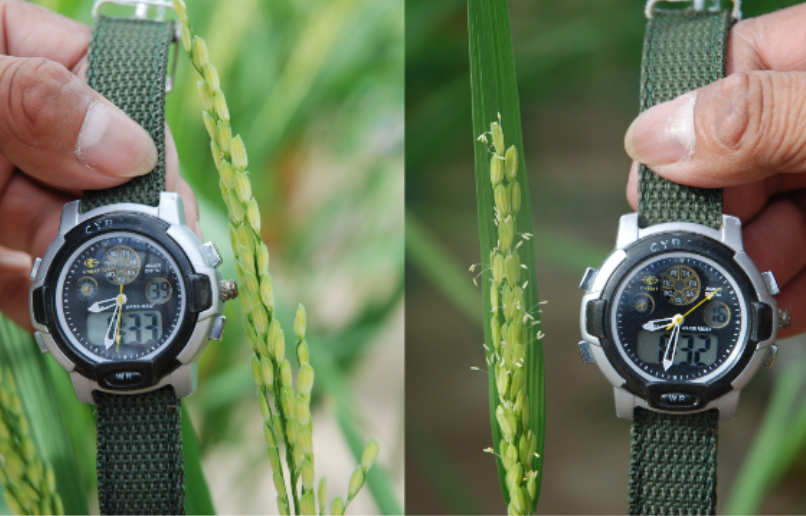
The newly identified gene, known as Early Morning Flowering 3 (EMF3), allows rice plants to flower earlier in the morning when temperatures are cooler. This natural adaptation helps rice plants avoid the intense heat that often occurs later in the day, protecting fertilization and grain development.
Rice typically flowers between 10:00 a.m. and noon, when temperatures can reach 33°C to 35°C. Exposure to excessive heat during this critical period can disrupt pollination, resulting in sterile grains and lower harvests. Researchers found that a rare variant of the gene, known as emf3-1D, shifts flowering approximately 1.5 hours earlier, significantly improving grain fertility under high-temperature conditions.
According to scientists involved in the study, the discovery represents an important step forward in developing climate-smart crop varieties capable of maintaining productivity under increasingly challenging environmental conditions.
As climate change continues to threaten food production systems, innovations such as EMF3 are becoming increasingly important. Heat stress is already affecting staple crop yields in many parts of Africa, Asia, and other tropical regions, raising concerns about food security, farmer incomes, and the resilience of agricultural value chains.
By helping crops withstand heat stress without compromising growth or productivity, scientific breakthroughs such as EMF3 contribute to broader efforts to ensure sustainable food production in a changing climate. The gene affects only the timing of flower opening and does not alter other important plant characteristics, making it an attractive option for crop improvement programs.
Researchers are already introducing the trait into several widely cultivated rice varieties grown across Asia, Africa, and Latin America. The technology can be incorporated into breeding programs through DNA marker-assisted selection, providing breeders with an efficient tool for developing heat-resilient rice varieties.
Scientists also believe the discovery could support future gene-editing efforts aimed at accelerating the development of climate-resilient crops capable of thriving under warmer conditions.
The breakthrough highlights the critical role of agricultural research, innovation, and international collaboration in addressing emerging food security challenges. It also demonstrates how investments in science can generate practical solutions that help farmers adapt to climate change while safeguarding productivity and livelihoods.
The full article, “Rice EMF3 Alleles Adjust Flower Opening Time to Enhance the Seed Setting Rate Under High Temperature Stress” is available in the Plant Biotechnology Journal.
Source: IRRI