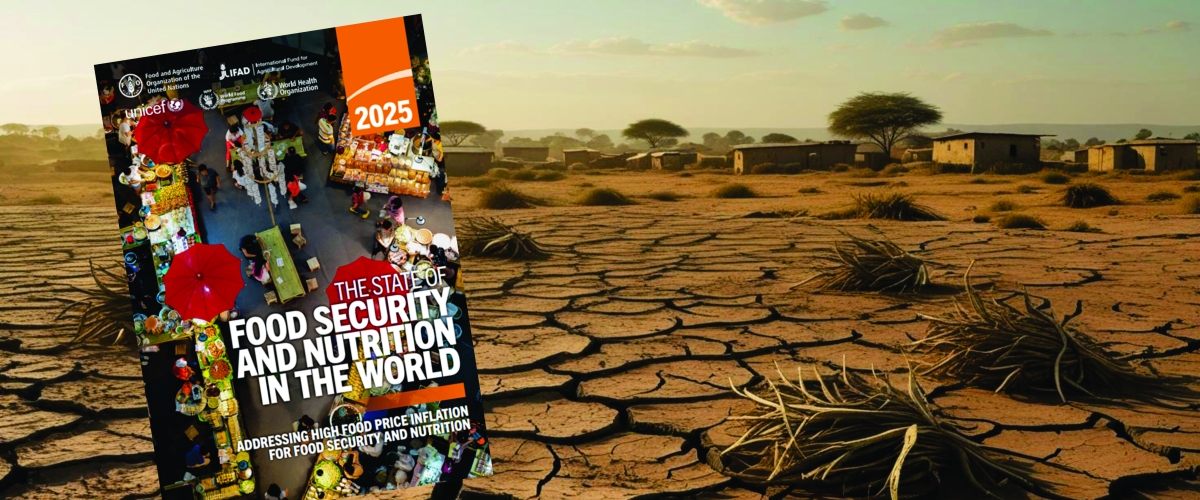
The 2025 edition of The State of Food Security and Nutrition in the World presents a complex picture. While the world appears to be making cautious progress in reducing hunger, many countries in Africa, particularly in the Southern African region, are moving in the opposite direction. The report underscores a distressing truth: Africa is the only continent where hunger continues to rise in both absolute and proportional terms.
Global Trends: A Slight Recovery with Stark Regional Contrasts
Globally, the prevalence of undernourishment declined modestly from 8.7% in 2022 to 8.2% in 2024. This positive trend is largely driven by improvements in South and South-Eastern Asia and South America. The number of people unable to afford a healthy diet also fell globally, from 2.68 billion in 2022 to 2.60 billion in 2024.
However, the African continent saw the opposite. The number of undernourished people in Africa rose to approximately 307 million in 2024, accounting for more than 20% of the continent’s population. The number of people unable to afford a healthy diet increased significantly — from 864 million in 2019 to over 1 billion in 2024. Africa now hosts nearly 40% of the world’s population that cannot afford a healthy diet, despite comprising only about 17% of the global population.
Southern Africa: A Closer Look
The SADC region, comprising 16 Member States, is home to some of the most food-insecure population on the continent. Several SADC countries featured prominently in the 2025 report for experiencing either high or rising food insecurity:
Zambia
Zambia reported significant price volatility in staple foods such as maize, its primary dietary component. Inflationary pressure has contributed to a sharp rise in the cost of a healthy diet. The cost increased in tandem with rural food insecurity levels, which remain substantially higher than urban areas. In rural areas, over 60% of the population was classified as moderately or severely food insecure in 2024.
Zimbabwe
Zimbabwe was listed among countries that experienced hyperinflation, with year-on-year food inflation well above 350% between 2021 and 2023. Despite some macroeconomic stabilization efforts, the lingering effects of these shocks have kept the affordability of healthy diets far out of reach for most households. Real wage declines have been severe, undermining any potential gains from improved food availability.
Mozambique
The report indicates that Mozambique’s food insecurity has worsened since 2022, driven by a combination of climate shocks (notably cyclone-induced floods), high reliance on food imports, and inflation in global food and fuel prices. In 2024, the prevalence of moderate or severe food insecurity in Mozambique was above 60%, with a significant proportion of the population unable to afford nutrient-dense foods.
Malawi
Malawi experienced sharp increases in the prices of basic food items, with maize and vegetable oils among the hardest hit. Despite national efforts to subsidize inputs and stabilize food markets, rural households, especially smallholder farmers, remain net buyers of food and have seen purchasing power steadily erode.
Drivers of Regional Challenges
Several interrelated factors have contributed to worsening food and nutrition outcomes in Southern Africa:
- Inflation and Cost of Healthy Diets: The average cost of a healthy diet in Africa rose to USD 4.41 PPP/person/day in 2024, with SADC countries such as Malawi, Zimbabwe, and Zambia exceeding this average. This contrasts with Oceania at USD 3.86 and Northern America and Europe at USD 4.02 PPP/day.
- Rising Inequality and Gender Gaps: The report notes that in Africa, food insecurity remains higher among women than men, with the gender gap widening again between 2023 and 2024. In rural SADC communities, women are often the last to eat and the first to sacrifice diet quality during crises.
- Children at Risk: In Southern Africa, child wasting, stunting, and inadequate dietary diversity remain a critical concern. The prevalence of child wasting in low-income countries, including several SADC Member States, was reported at 6.4% in 2024 — above the global average. Moreover, only one-third of children aged 6–23 months globally met the Minimum Dietary Diversity (MDD-C) standard, with lower rates in African countries.
- Food Price Inflation: Global median food price inflation peaked at 13.6% in January 2023. In low-income countries like Zimbabwe and Malawi, it exceeded 25%. The surge in food prices has eroded real wages and increased food insecurity — particularly in countries without robust social protection systems.
Opportunities and Policy Priorities
While the data points to a bleak reality for Southern Africa, the report also provides a roadmap for recovery. Key policy recommendations include:
- Strengthening social protection systems with inflation-adjusted transfer mechanisms;
- Investing in resilient agriculture to reduce dependency on food imports and exposure to global shocks;
- Improving access to data and real-time market intelligence to enable evidence-based decisions;
- Expanding support for maternal and child nutrition, especially through community-based programming.
CCARDESA and FSRP: Supporting Regional Responses
Within this challenging landscape, CCARDESA — through the World Bank-funded Food Systems Resilience Programme (FSRP) — is mandated to coordinate technical support and knowledge exchange among SADC countries. The 2025 edition of the State of Food Security and Nutrition in the World highlights the importance of regional platforms in tackling systemic vulnerabilities, such as input supply chain fragility, climate shocks, and cross-border trade disruptions.
CCARDESA’s work to promote climate-smart agriculture, digital advisory services, and evidence-based policy engagement is aligned with the report’s emphasis on structural reforms and targeted resilience-building investments. However, the pace and scale of intervention must accelerate if the region is to make meaningful progress before 2030.
Takeaways
The 2025 The State of Food Security and Nutrition report delivers a sobering yet critical message: global recovery is possible, but Southern Africa is being left behind. The region’s worsening food and nutrition indicators are not only a humanitarian concern but also a warning signal for economic and social stability. Urgent, data-driven, and inclusive interventions are needed to reverse these trends — starting with making healthy diets affordable, accessible, and culturally appropriate for all.
With less than five years remaining to meet the SDG 2 targets, the SADC region cannot afford to do business as usual.
To access the full version of the report, please click here.