In the village of Nkoeng in Lesotho's Leribe District, farming was once a struggle against uncertainty. Farmers planted crops using traditional methods passed down through generations, hoping for good rains and reasonable harvests. Yields were often low, incomes were limited, and farming was largely viewed as a means of survival rather than a pathway to prosperity.
Today, the story is different.
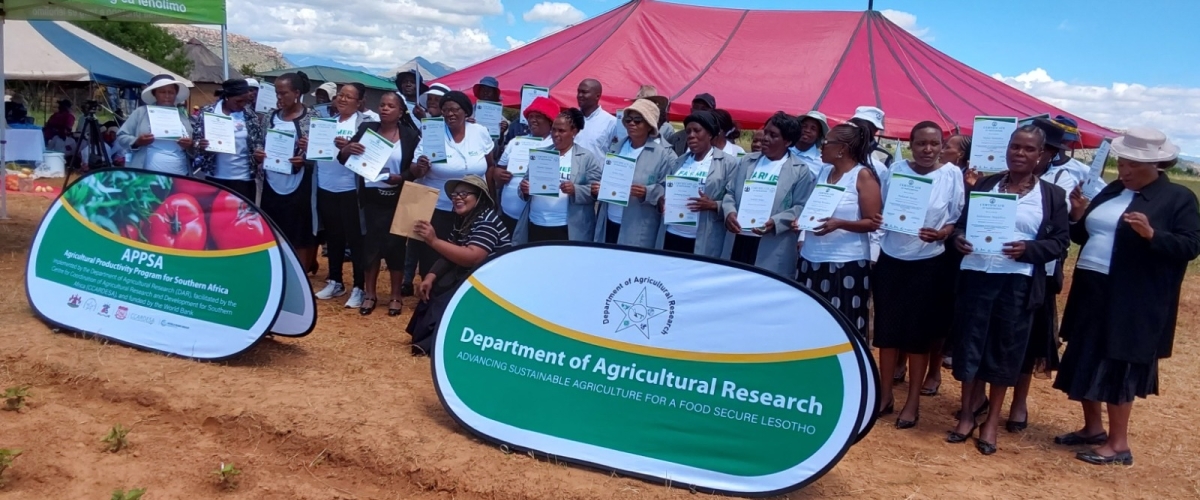
The transformation began with a Farmer Field School (FFS), established through the Agricultural Productivity Programme for Southern Africa (APPSA), a World Bank-funded regional initiative coordinated by the Centre for Coordination of Agricultural Research and Development for Southern Africa (CCARDESA). While APPSA officially ended in 2025, the Farmer Field Schools it helped establish continue to deliver benefits that are visible across farming communities in Lesotho.
For the 57 farmers who joined the Nkoeng Farmer Field School in 2021, the experience was more than training. It was a shift in mindset.
The school brought together 45 women and 12 men to learn through observation, experimentation, and practical fieldwork. Farmers tested improved maize and bean varieties, analysed crop performance, learned soil management techniques, and explored environmentally friendly approaches to pest control. Every lesson was delivered in the field, where farmers could immediately apply what they learned.
"It was different from any training we had received before," recalled one participant. "We learned by doing. We observed our crops closely, discussed challenges together, and made decisions based on what we saw in the field."
The results soon became evident. Farmers reported yield increases of more than 40 percent from improved maize varieties compared to traditional seed. More importantly, they gained knowledge and confidence that continue to influence their farming decisions today.
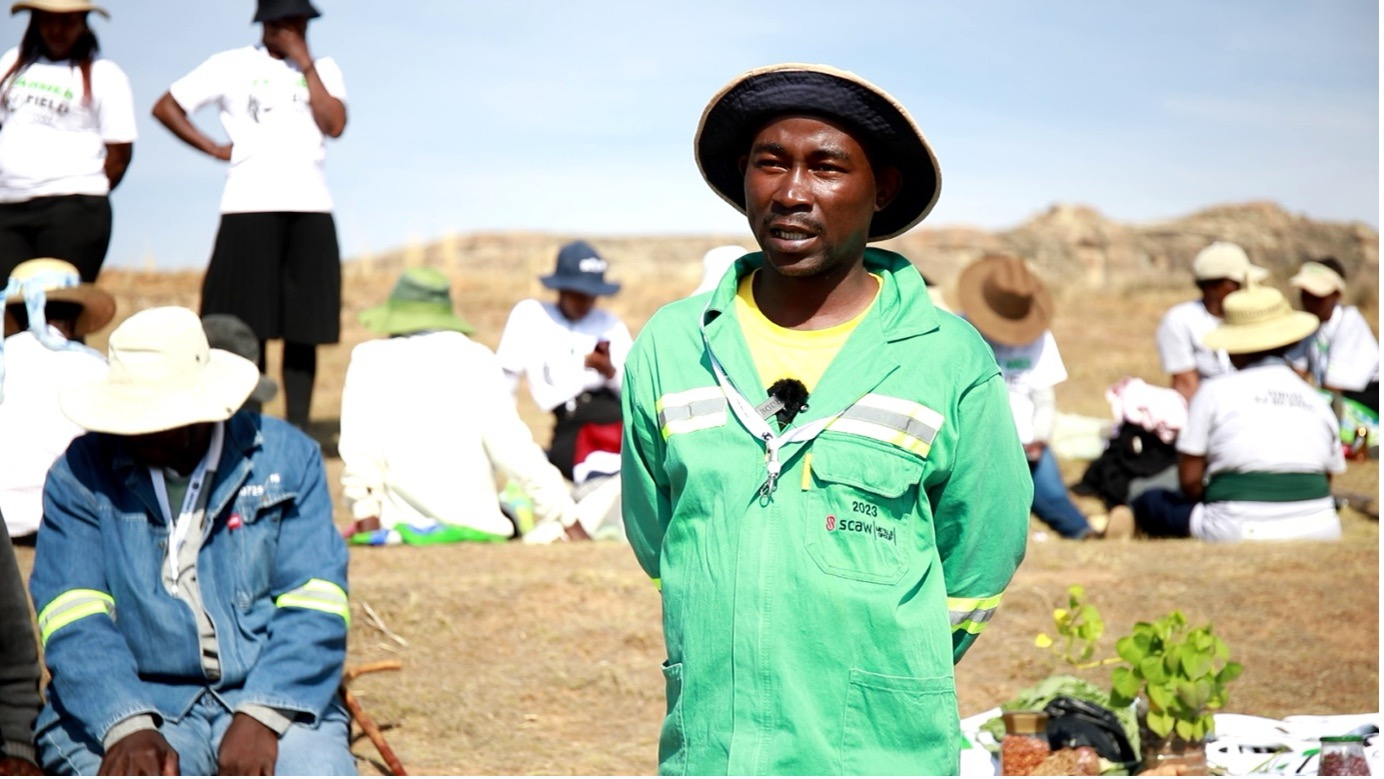
Among them was Maphoto Nkhooa.
For years, Nkhooa grew maize and sorghum without achieving the results he hoped for. Through the Farmer Field School, he learned how to select quality seed, monitor crop development, manage pests, and treat farming as a business.
Today, his harvests provide enough food for his family throughout the year, with surplus produce sold in local markets.
"I can now support my family through farming," he says. "I pay school fees for my children and meet household expenses from the income I earn from my fields."
Yet the true success of the Farmer Field School cannot be measured by yields alone.
Its greatest achievement has been the creation of a culture of learning among farmers. Participants no longer wait for solutions to come from outside. They observe, analyse, experiment, and share knowledge with one another. They conduct soil sampling, evaluate production costs, practise crop rotation, and make informed decisions based on evidence.
As neighbouring communities witnessed the results, the interest grew rapidly. Neighbouring Farmers wanted to understand why FFS members were harvesting more and speaking confidently about their farming enterprises. The demand led to the establishment of additional Farmer Field Schools across Leribe and beyond.
For farmers like Mamofumotse Molope, the attraction was immediate.
"We saw what other farmers were achieving and wanted to learn the same methods," she says. "The Farmer Field School taught us that successful farming starts with understanding what is happening in your field and making decisions based on that knowledge."
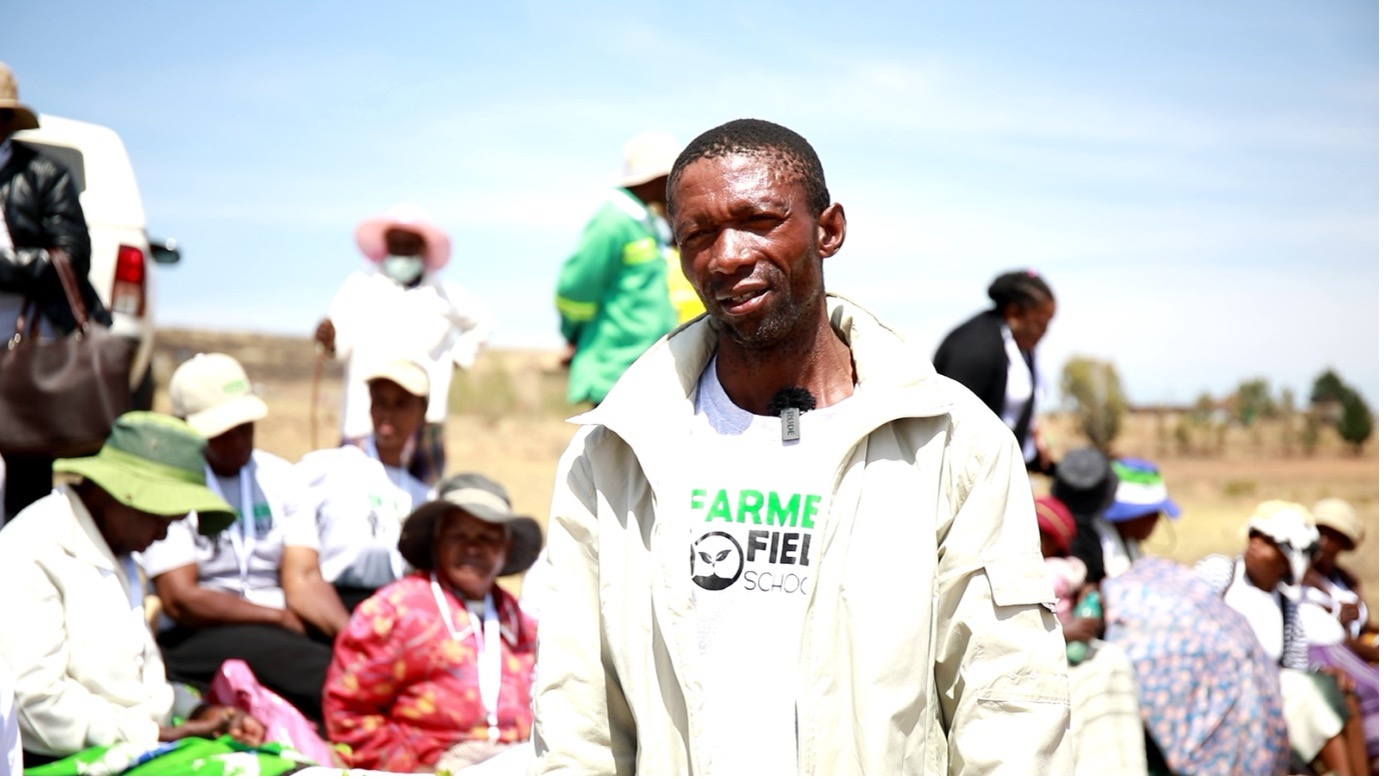 Maphoto Nkhooa - Farmer | 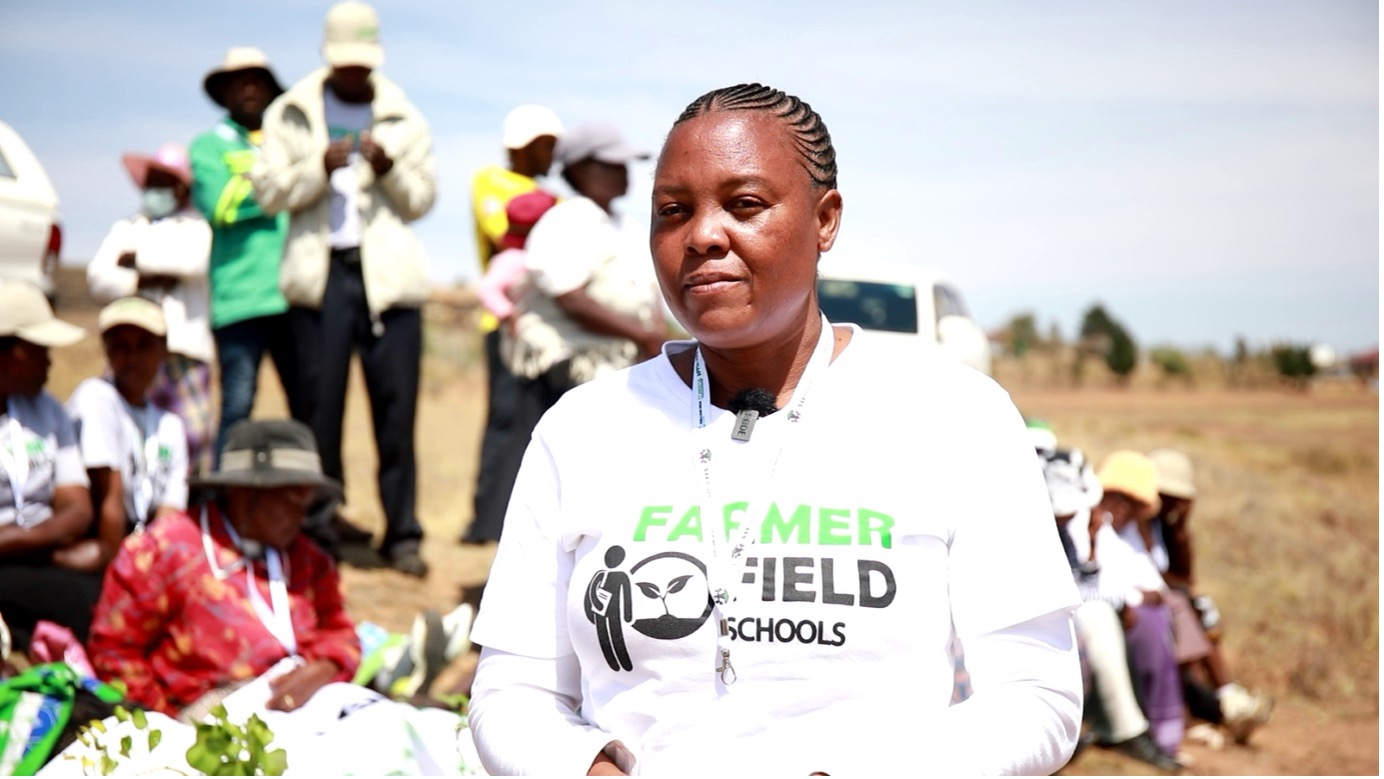 Mamofumotse Molope - Farmer |
The impact has also reached young people. Participants such as Tumisang Mokhelenyane, who previously spent much of his time searching for work elsewhere, now view agriculture differently.
"The Farmer Field School showed me that farming can be a business and a future," he explains.
Even farmers who never formally joined the schools have benefited. Inspired by the success of FFS members, they adopted improved practices, diversified into horticulture, and expanded their production. Some, like vegetable farmer Lenkoane Moshoeshoe, significantly increased their operations after observing what fellow farmers were achieving.
One of the most visible examples of this ripple effect has been the spread of sweet potato production. Following the success of FFS demonstration plots, neighbouring farmers began obtaining vines from FFS members and established their own fields. In Nqechane, farmer Tabola acquired vines from FFS participants and later shared them with fellow community members. During harvest, he organised a field day on his farm, allowing farmers to observe the crop's performance, learn production techniques, and discuss its benefits. Such farmer-to-farmer exchanges accelerated the adoption of sweet potato production far beyond the original FFS groups.
|  Tumisang Mokhelenyane - Farmer | 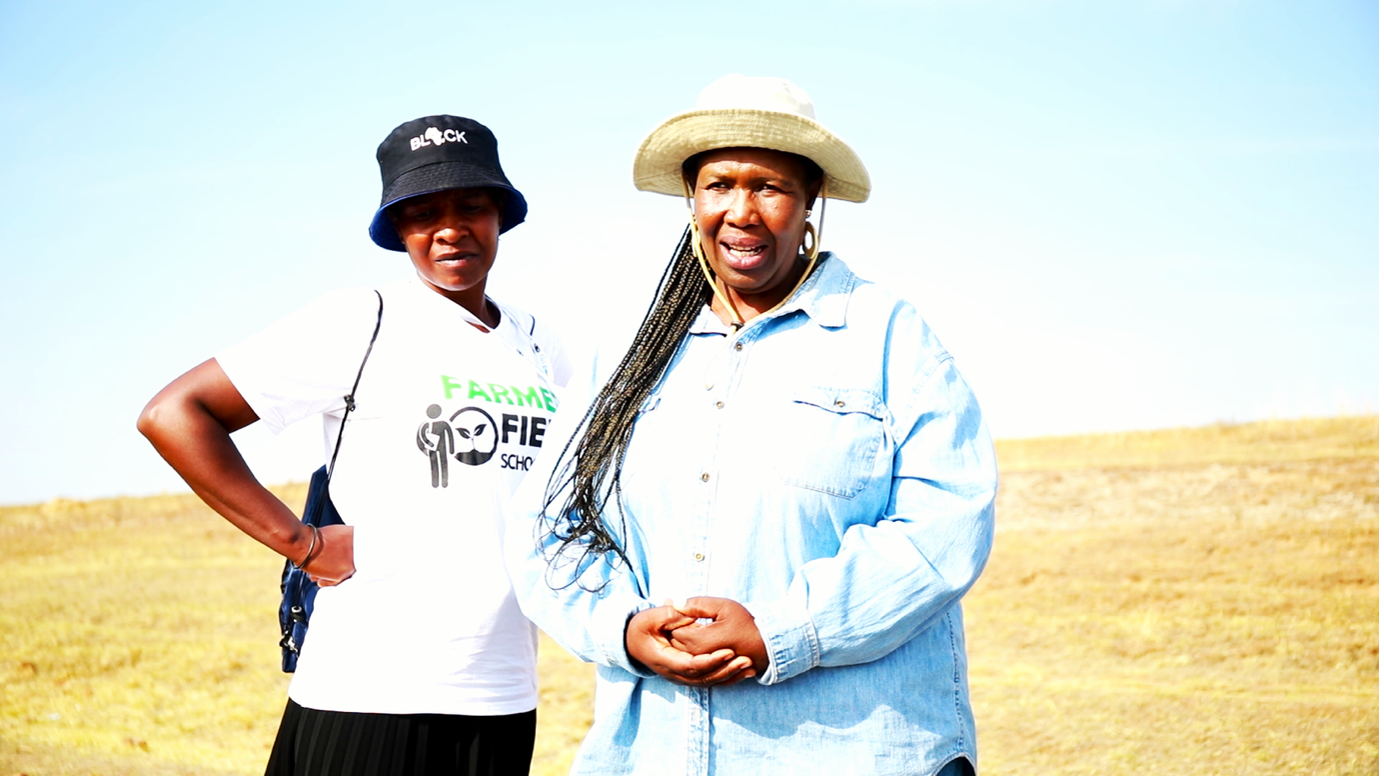 Mamotiki Makoa - Extensiion Officer |
The spirit of learning and innovation has also been sustained through exchange visits. During the 2025/26 cropping season, an exchange visit organised by Nkoeng FFS led to the formation of two new schools - Matlakeng FFS and Taung FFS - under the Tale Resource Centre, with support from the Smallholder Agriculture Development Project (SADP). After establishing demonstration plots and completing training, Taung FFS hosted farmers from the Nqabeni Resource Centre in Butha-Buthe District. The visit enabled farmers to observe technologies in practice, share experiences, and learn directly from one another. Inspired by what they observed, Nqabeni farmers planted sweet potatoes in November 2025 and harvested their first crop in May 2026.
The influence of the FFS approach has even crossed national borders. During the graduation ceremony of the Lenyakoane Farmer Field School in Leribe, members of the Asparagus Ladies Group from Ficksburg in South Africa's Free State Province participated in field tours and interacted with FFS members. Impressed by the successful cultivation of sweet potatoes by Lesotho's smallholder farmers, the visitors commended the innovation and recognised the crop's value as a nutritious and climate-resilient food source. The visit, organised through collaboration between the Department of Agricultural Research (DAR) and SADP, highlighted the growing regional recognition of the Farmer Field School model.
The success of the approach has also attracted the attention of development partners. Building on lessons from APPSA, the Food and Agriculture Organization (FAO) adopted the Farmer Field School methodology and expanded it into Berea, Butha-Buthe, and Thaba-Tseka districts. With technical support from DAR, newly established FFS groups received training in participatory learning approaches, while sweet potato was introduced as one of the priority crops to support nutrition and food security. In a powerful demonstration of sustainability, members of Taung FFS supplied sweet potato vines to the new FAO-supported groups, ensuring that knowledge and technologies continued to spread through farmer-led networks.
According to extension officers, this ripple effect is exactly what makes the Farmer Field School approach so powerful. Farmers become teachers, innovators, and ambassadors of change within their own communities.
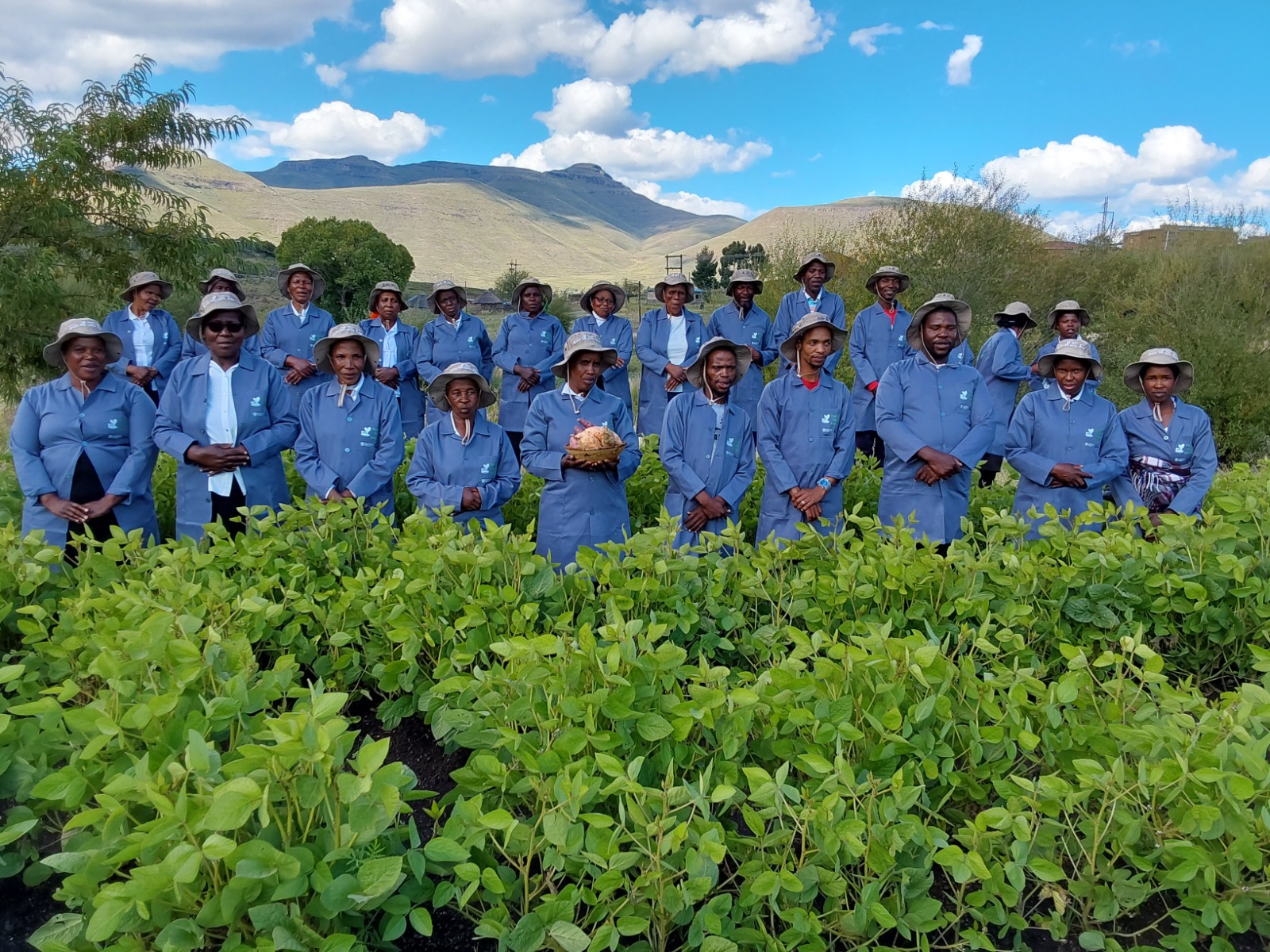 Khutlo se Naoa FFS | 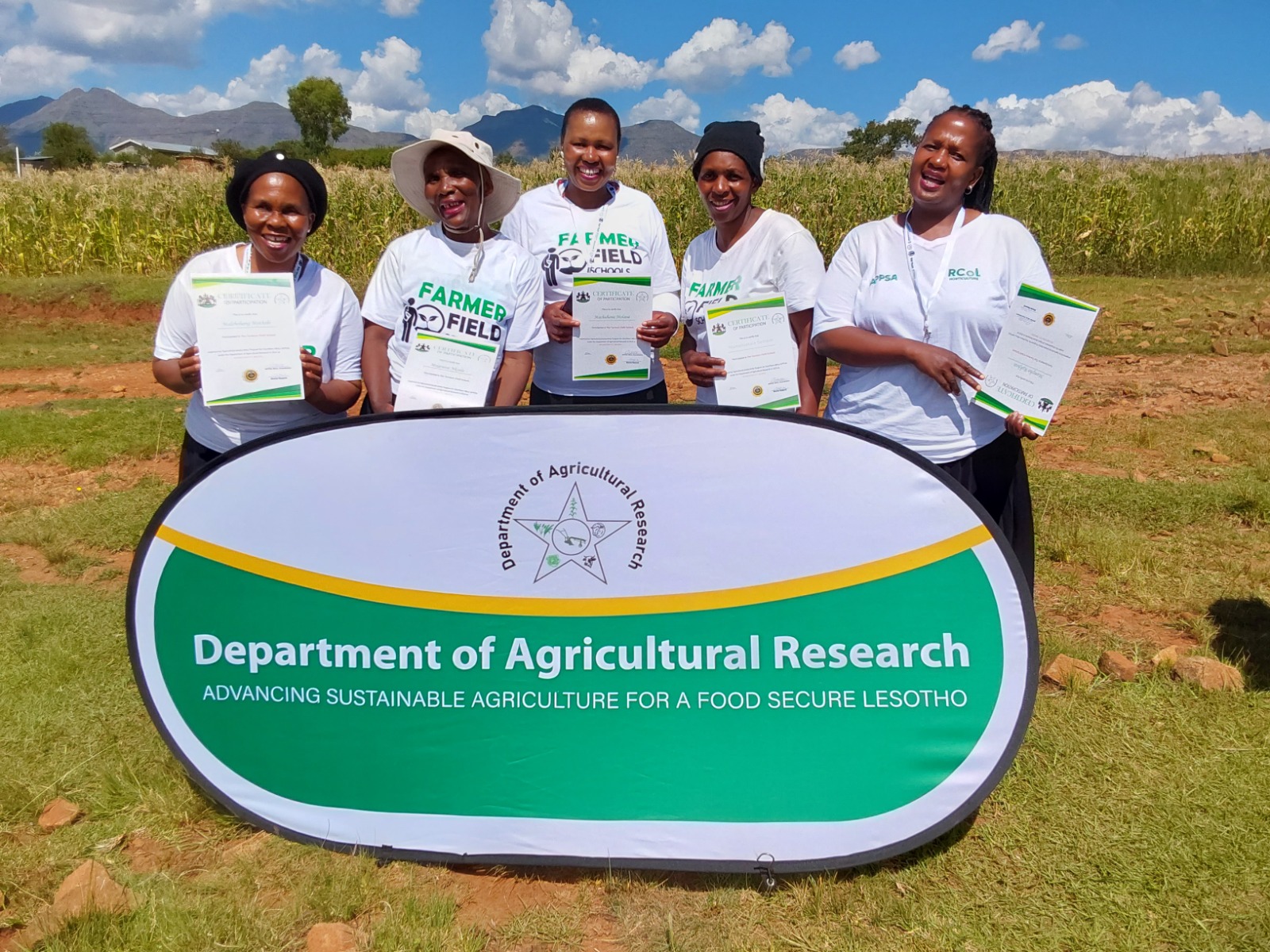 Nyokosoba FFS | 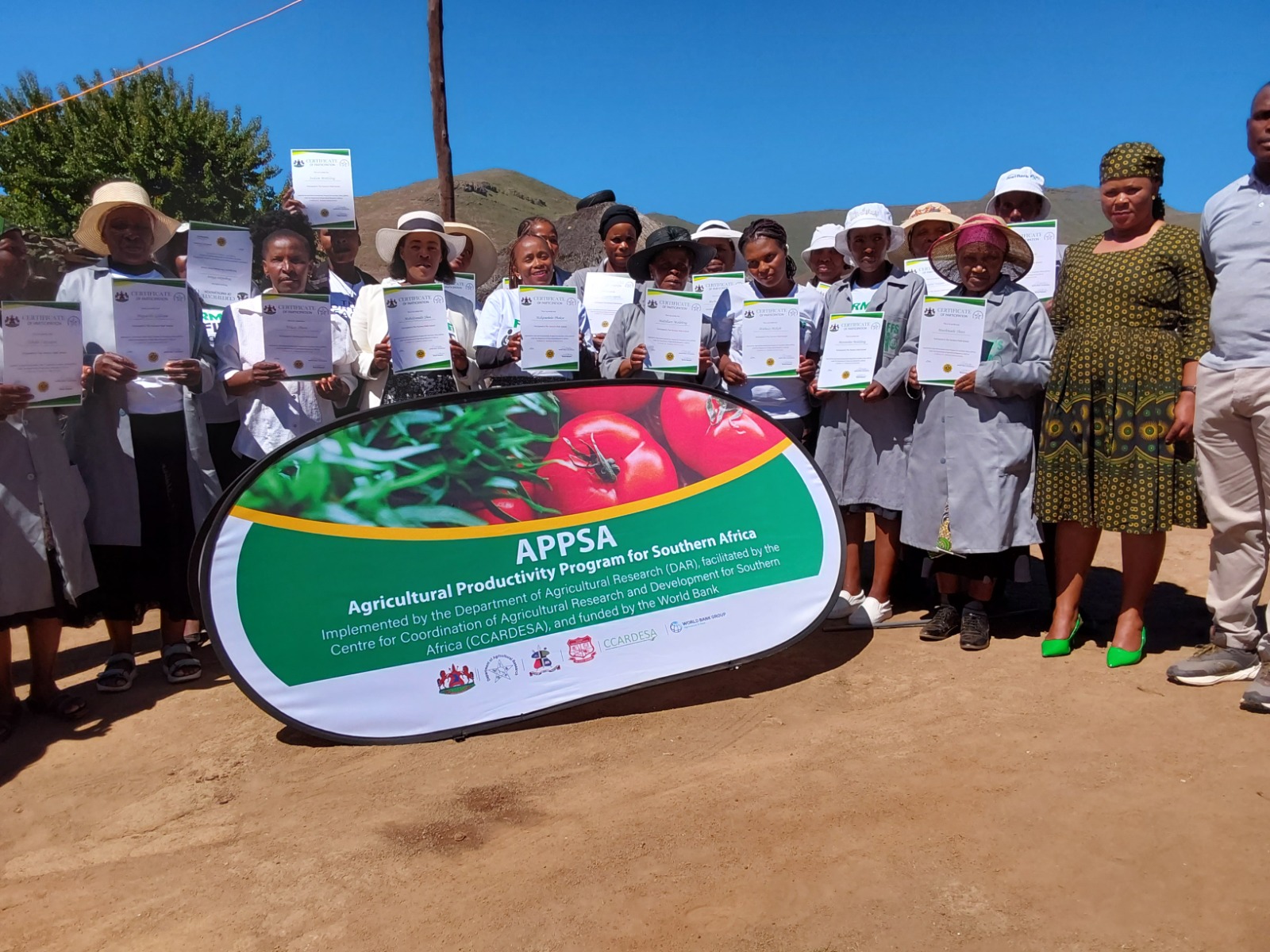 Thabang FFS in Mokhotlong |
Years after APPSA's closure, the Farmer Field Schools continue to thrive as living classrooms where knowledge is shared, tested, and passed on. The crops harvested today are only part of the story. The greater harvest lies in the confidence, skills, and entrepreneurial spirit that farmers have developed and continue to spread.
The legacy of APPSA in Lesotho is therefore not found in infrastructure or project reports alone. It also lives in the Farmer Field Schools that continue to empower communities, strengthen food security, and inspire a new generation of farmers.
Acknowledgement: Mokhantso Lilian Morahanye, DAR Lesotho