

What happens when a young agripreneur spends years developing an agricultural innovation, proudly showcases it at an exhibition or competition, only to discover that someone else has claimed ownership or secured a patent for a similar invention? Who ultimately benefits from the creativity and resources invested by the original innovator?
As governments and development partners across Southern Africa increasingly encourage young people to showcase their innovations, concerns are emerging about the risks of exposing inventions without adequate intellectual property protection. While exhibitions, competitions and investment platforms offer valuable opportunities, innovators who lack knowledge of their rights may inadvertently compromise their ability to protect and commercially benefit from their creations.
Against this background, the Centre for Coordination of Agricultural Research and Development for Southern Africa (CCARDESA), in collaboration with the Southern African Development Community (SADC) Secretariat, the Council for Scientific and Industrial Research (CSIR), the Alliance for a Green Revolution in Africa (AGRA) and the Southern Africa Youth Forum (SAYoF), convened a regional webinar on 16 October 2026 to equip young agripreneurs with practical knowledge on protecting and commercialising agricultural innovations.
Organised under the World Bank supported Food Systems Resilience Programme (FSRP), the webinar brought together intellectual property specialists, commercialisation experts and young innovators to discuss how agricultural ideas can be protected and transformed into viable businesses.
 |  |
In remarks delivered on behalf of Mr Dagmore Tawonezvi, CCARDESA Acting Executive Director, Dr Majola Mabuza emphasised that many promising agricultural innovations fail to reach the market because their creators lack the knowledge and support needed to protect and commercialise them.
"An innovation that remains on the shelf cannot transform agriculture, create employment or improve livelihoods. Equally, an innovation that is not adequately protected may expose its creator to the risk of losing the commercial benefit of their own ingenuity," he stated.
He underscored the importance of treating intellectual property not merely as a legal safeguard, but as a business asset capable of attracting investment, facilitating technology transfer and creating commercial opportunities.
Delivering opening remarks on behalf of Mr Fahari Marwa, Director of Food, Agriculture and Natural Resources (FANR) at the SADC Secretariat, Dr Justify Shava stressed the need to support young innovators with appropriate protection, financing and market access.
"We know that we have a lot of innovations taking place. They need to be protected," he emphasised, noting that innovators should be able to recover their investments and benefit from their creativity.
Dr Shava also highlighted that the webinar was the 16th in a regional youth webinar series that has attracted approximately 2,500 participants, reflecting growing interest in youth participation in agrifood systems.
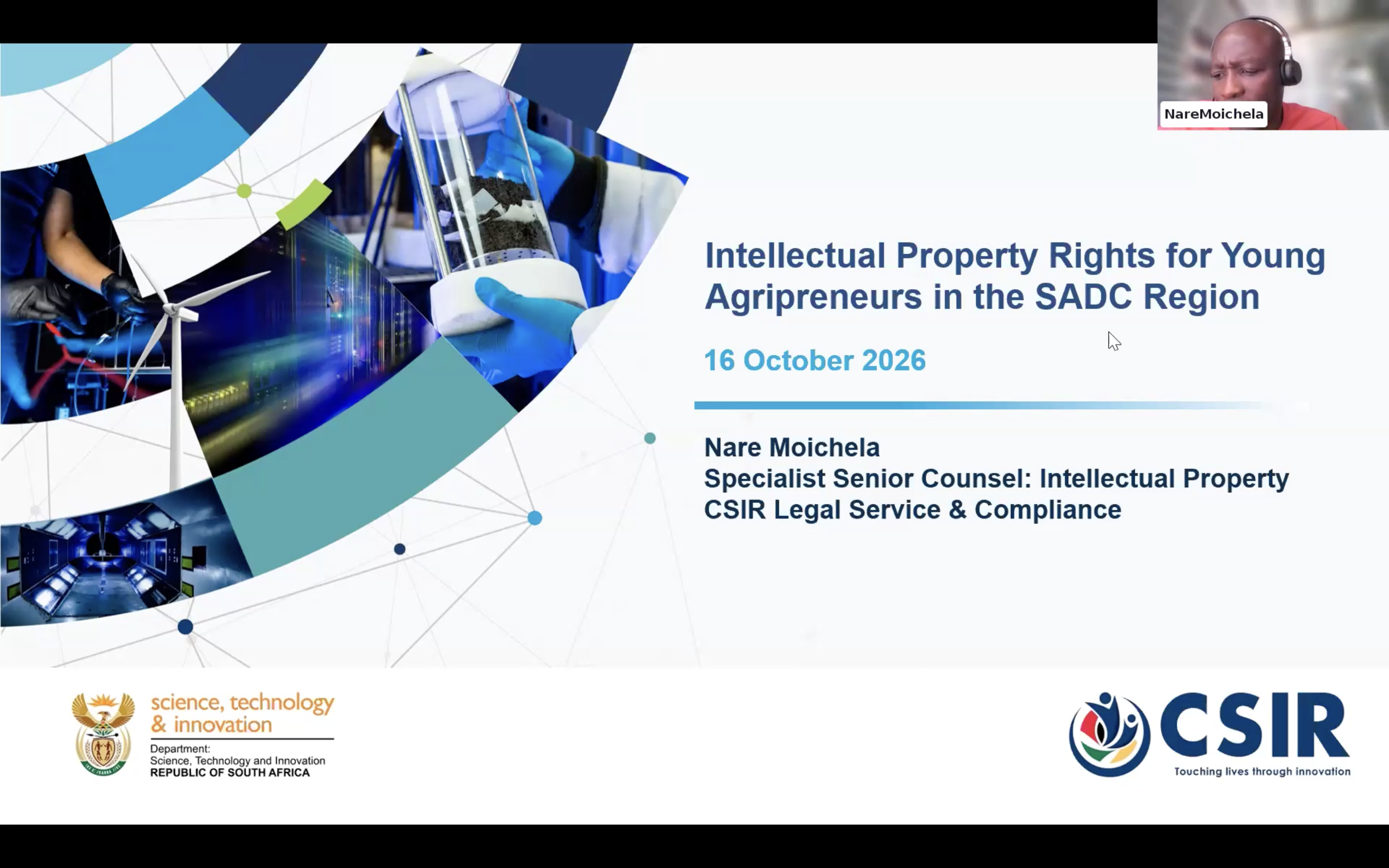 |  |  |  |
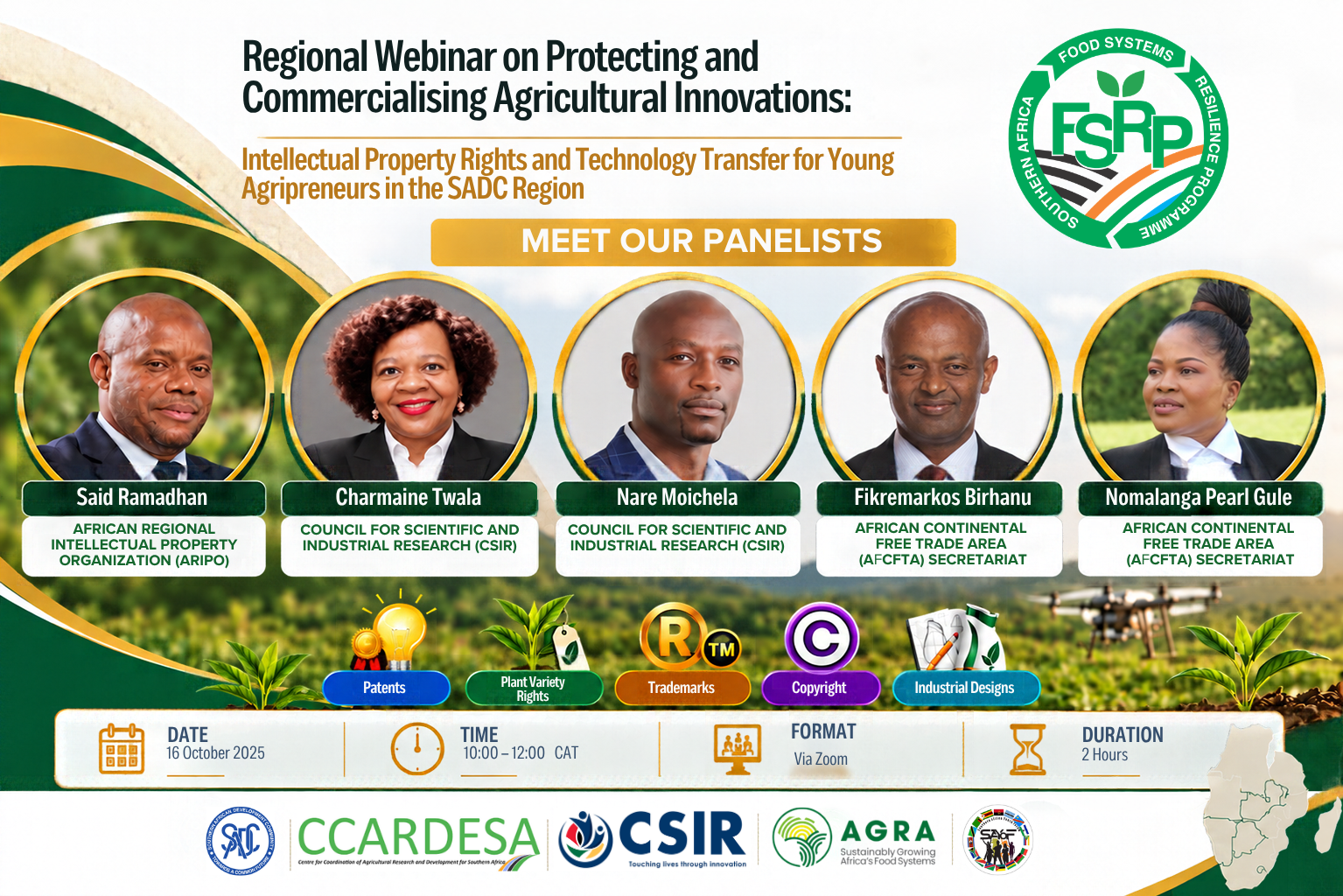
During the technical discussions, Mr Nare Moichela, Senior Intellectual Property Specialist at CSIR, explained the different forms of intellectual property protection, including patents, trademarks, industrial designs, copyright and trade secrets. He cautioned that publicly disclosing an invention before seeking patent protection could compromise its novelty and jeopardise the innovator's rights. He encouraged young people to document their inventions, establish ownership and seek appropriate advice before sharing sensitive technical information.
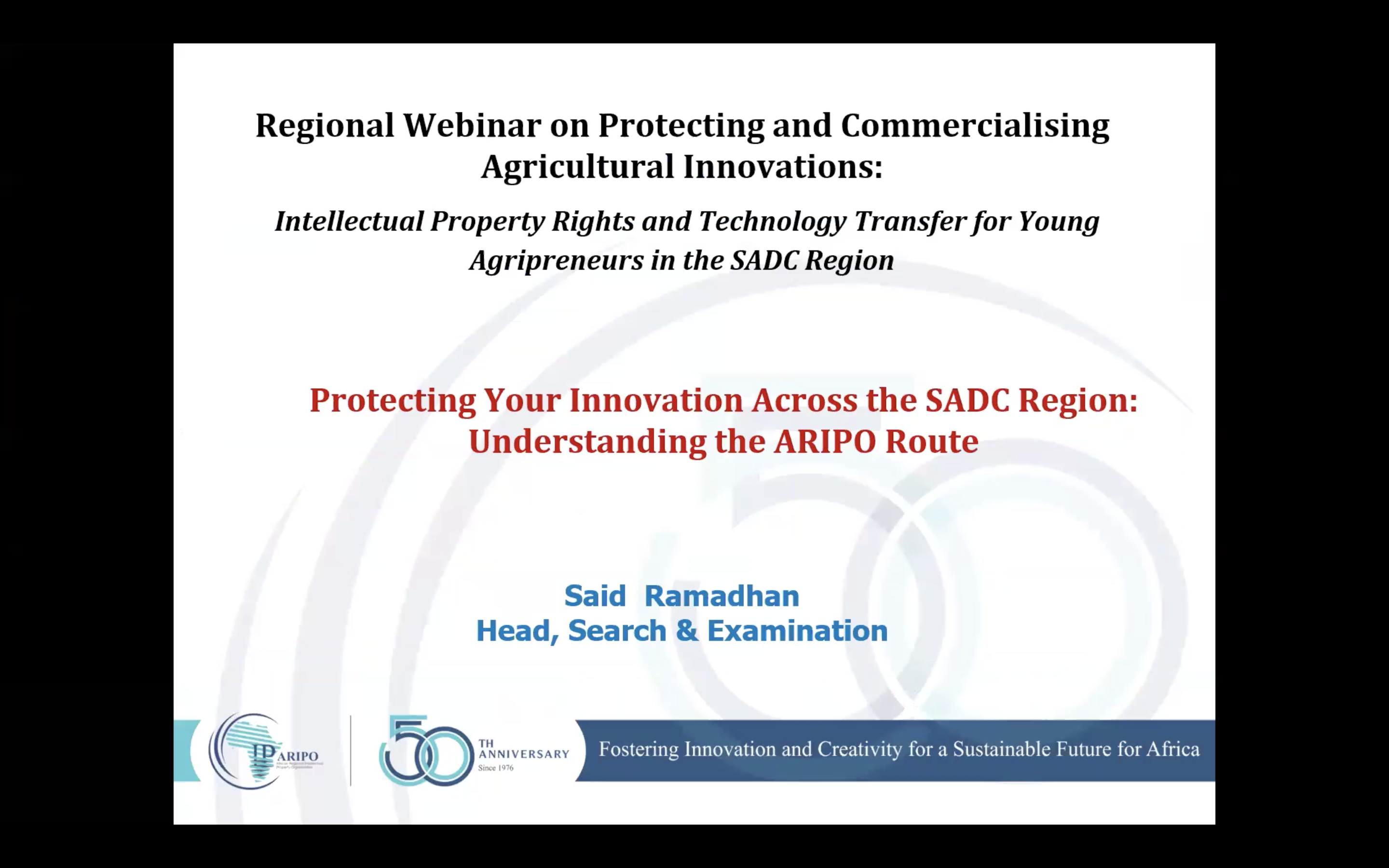
Mr Said Ramadhan, Head of Search and Substantive Examination at the African Regional Intellectual Property Organization (ARIPO), explained how regional Protocols enable innovators to seek intellectual property protection across participating countries. He outlined the patent application process and the importance of meeting requirements such as novelty, inventive step and industrial applicability.
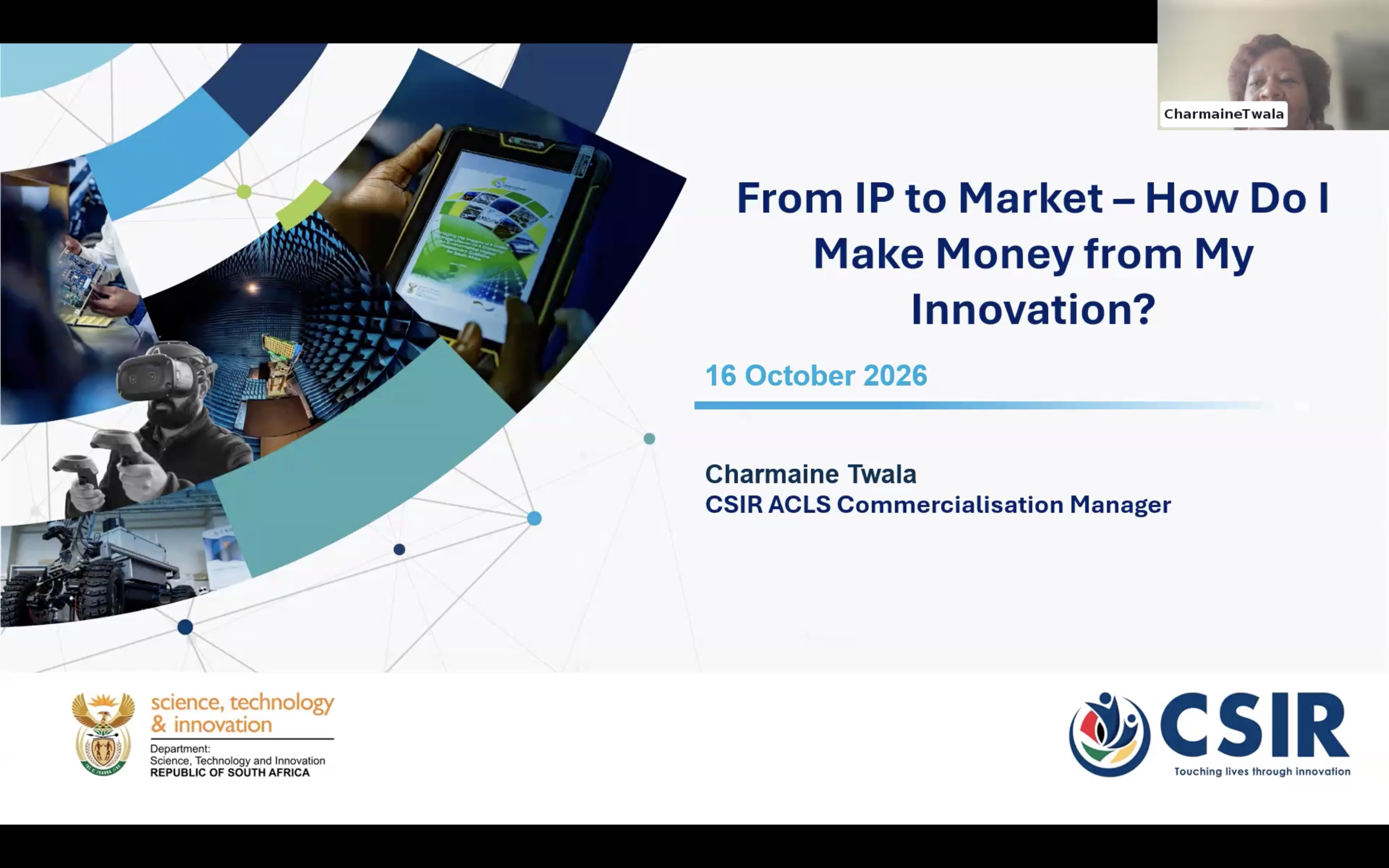
Ms Charmaine Twala, Technology Commercialisation Specialist at CSIR, shifted the discussion from protection to generating economic value. She explained how innovators can earn income through licensing, royalties, partnerships and new enterprises, stressing the importance of understanding market demand, developing viable business models and attracting investment.
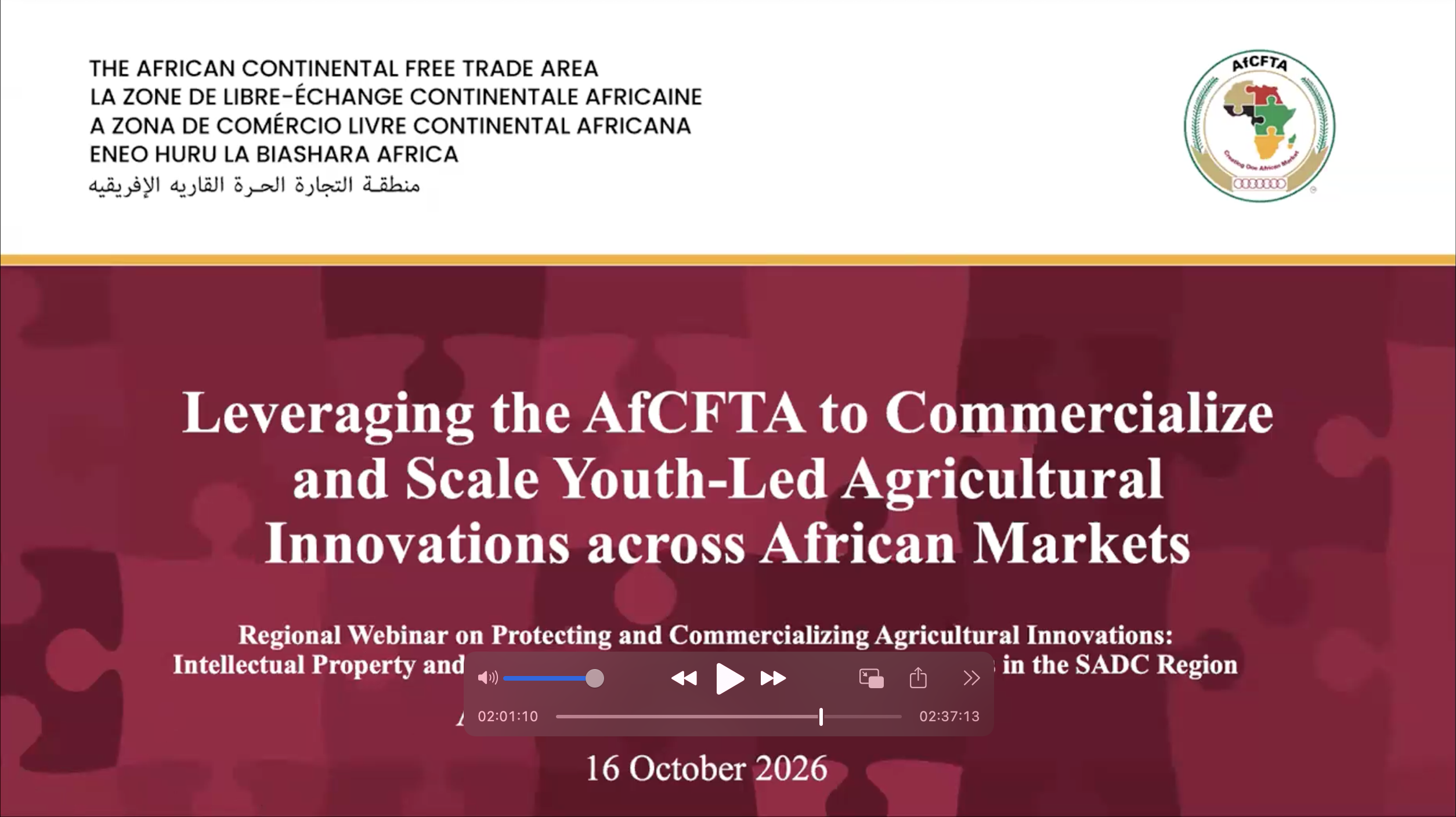
The webinar also examined opportunities under the African Continental Free Trade Area (AfCFTA). Ms Nomalanga Pearl Gule, Regional Trade Advisor for Southern and East Africa at the AfCFTA Secretariat, emphasised the importance of connecting regional innovation initiatives with continental trade opportunities. She highlighted efforts by the continental body to establish a harmonised intellectual property framework that would facilitate the protection and commercialisation of innovations across Africa's market of approximately 1.4 billion people.
Mr Fikremarkos Merso Birhanu, an intellectual property expert at the AfCFTA Secretariat, highlighted the AfCFTA Protocol on Intellectual Property Rights and its eight annexes as important steps towards harmonising intellectual property protection across Africa. He stressed that the framework prioritises young innovators, women and small enterprises, with commercialisation at its core, enabling innovators to turn protected inventions into businesses capable of competing across African markets.
Moderated by Hon. Princess Mojapelo, a SADC Youth Parliamentarian, the webinar provided an opportunity for participants to engage directly with experts on the practical challenges of protecting innovations before taking them to market. Participants also highlighted areas for further engagement under the subject.